Heliconia in December
Backyard Garden, Sunshine Coast
Since moving to subtropical Queensland, I have been fascinated by the heliconia growing in my backyard garden.
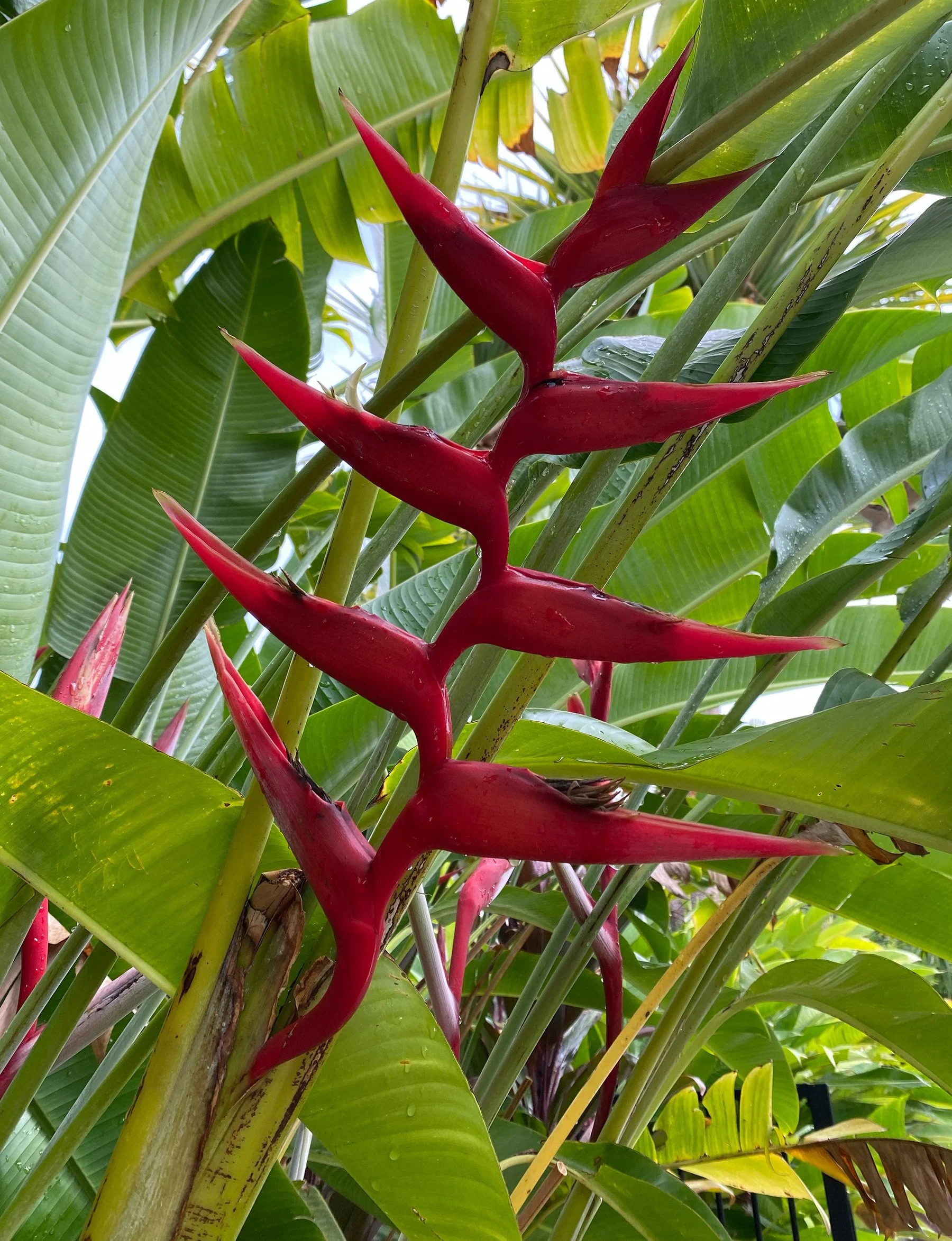
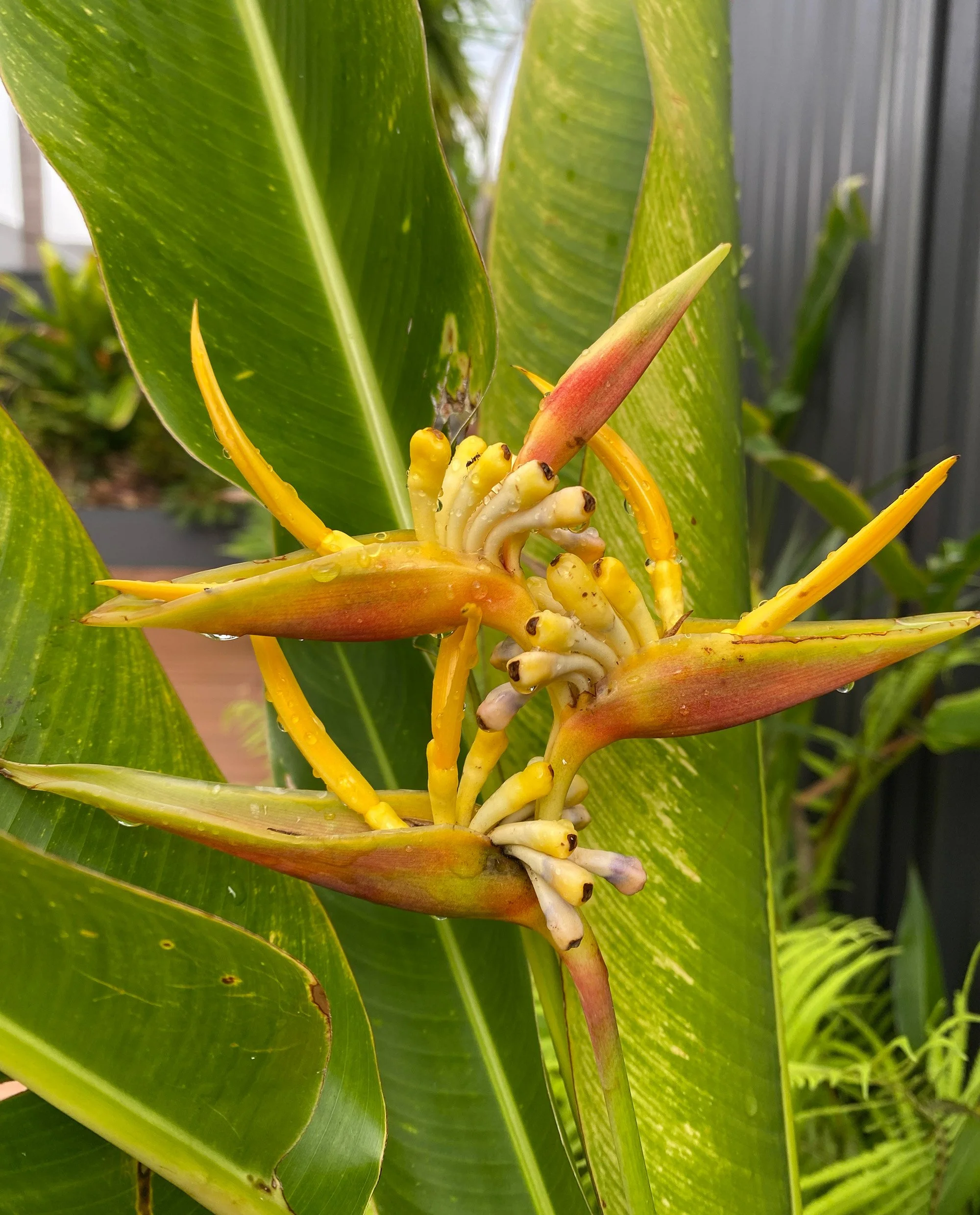
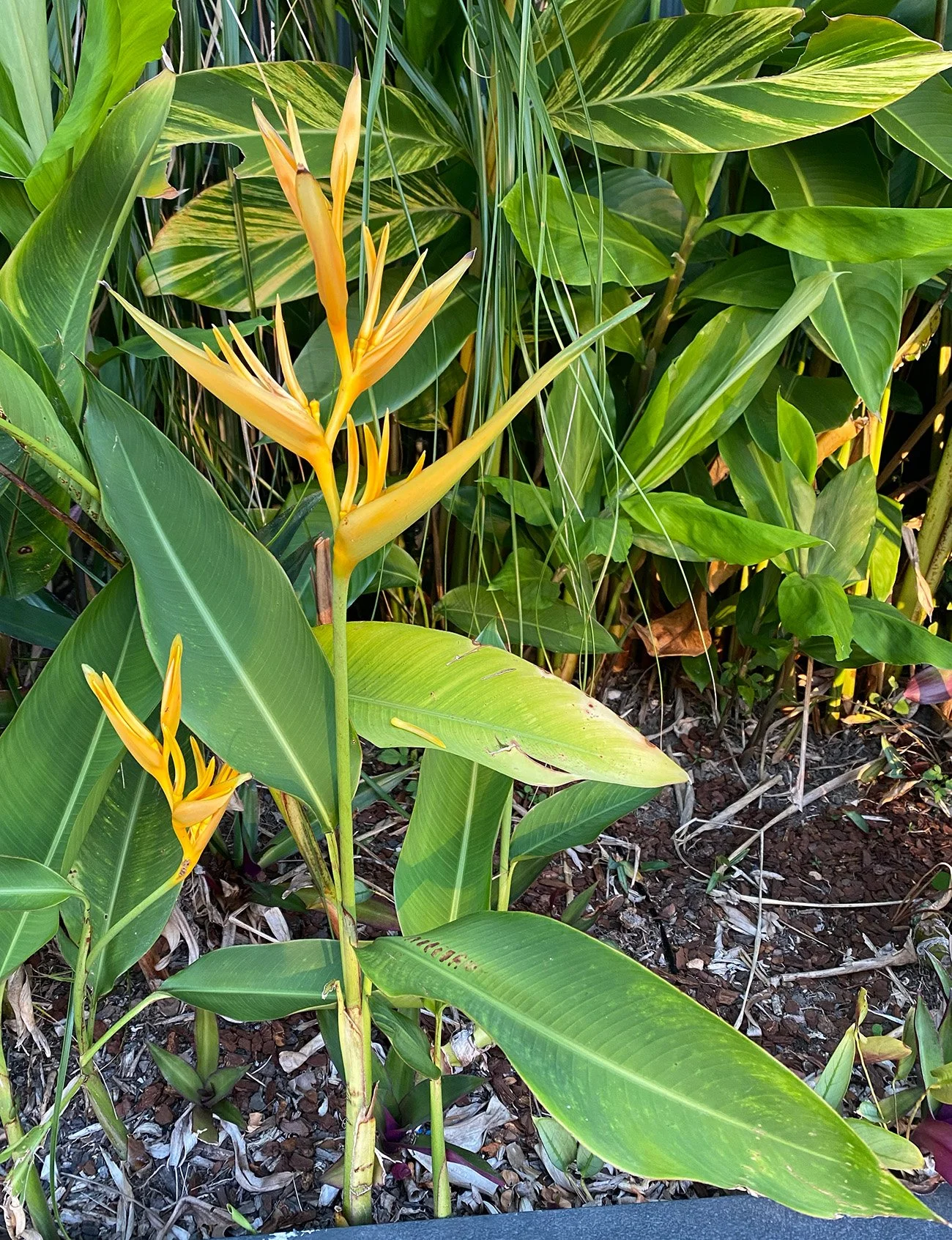
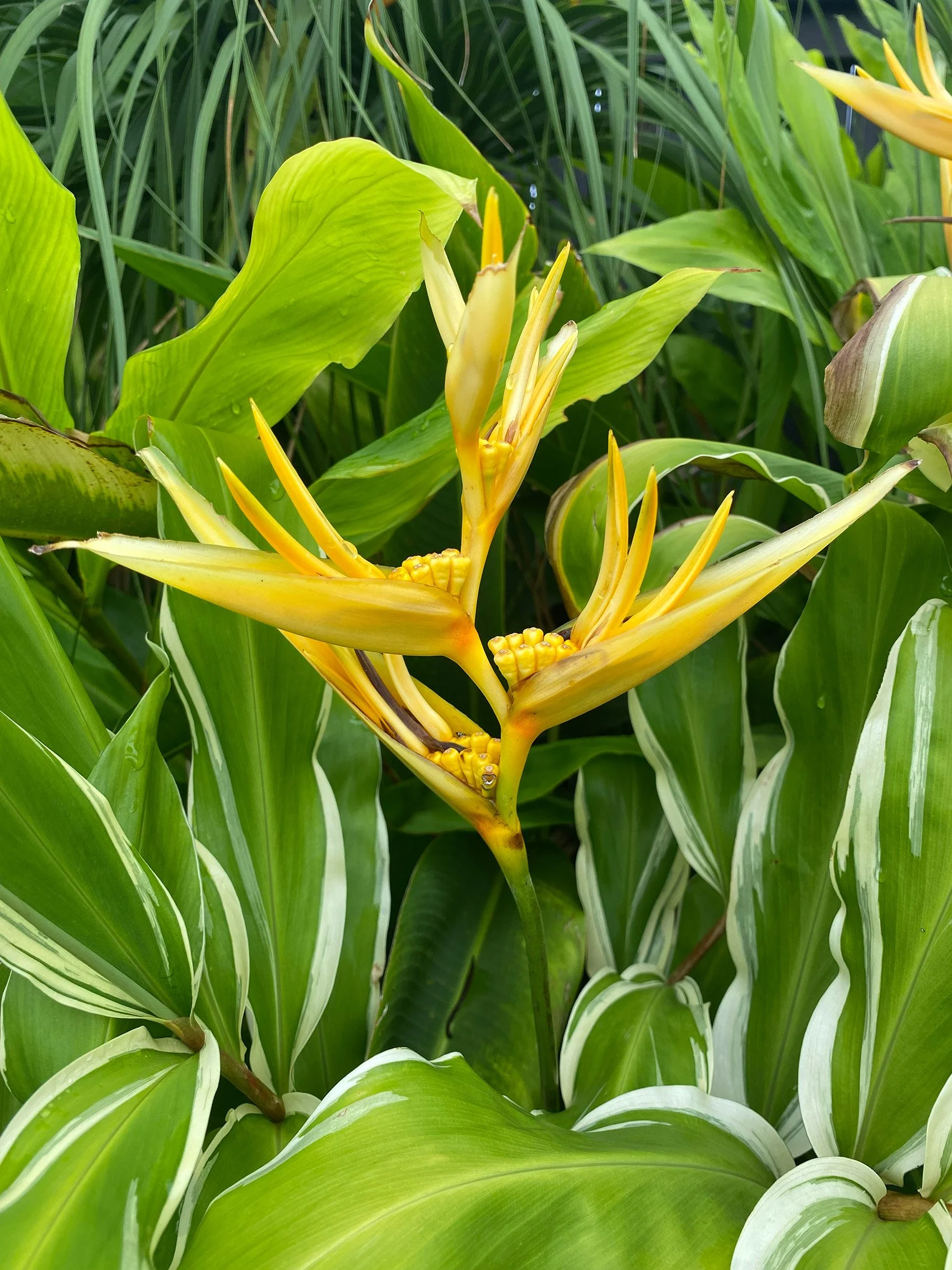
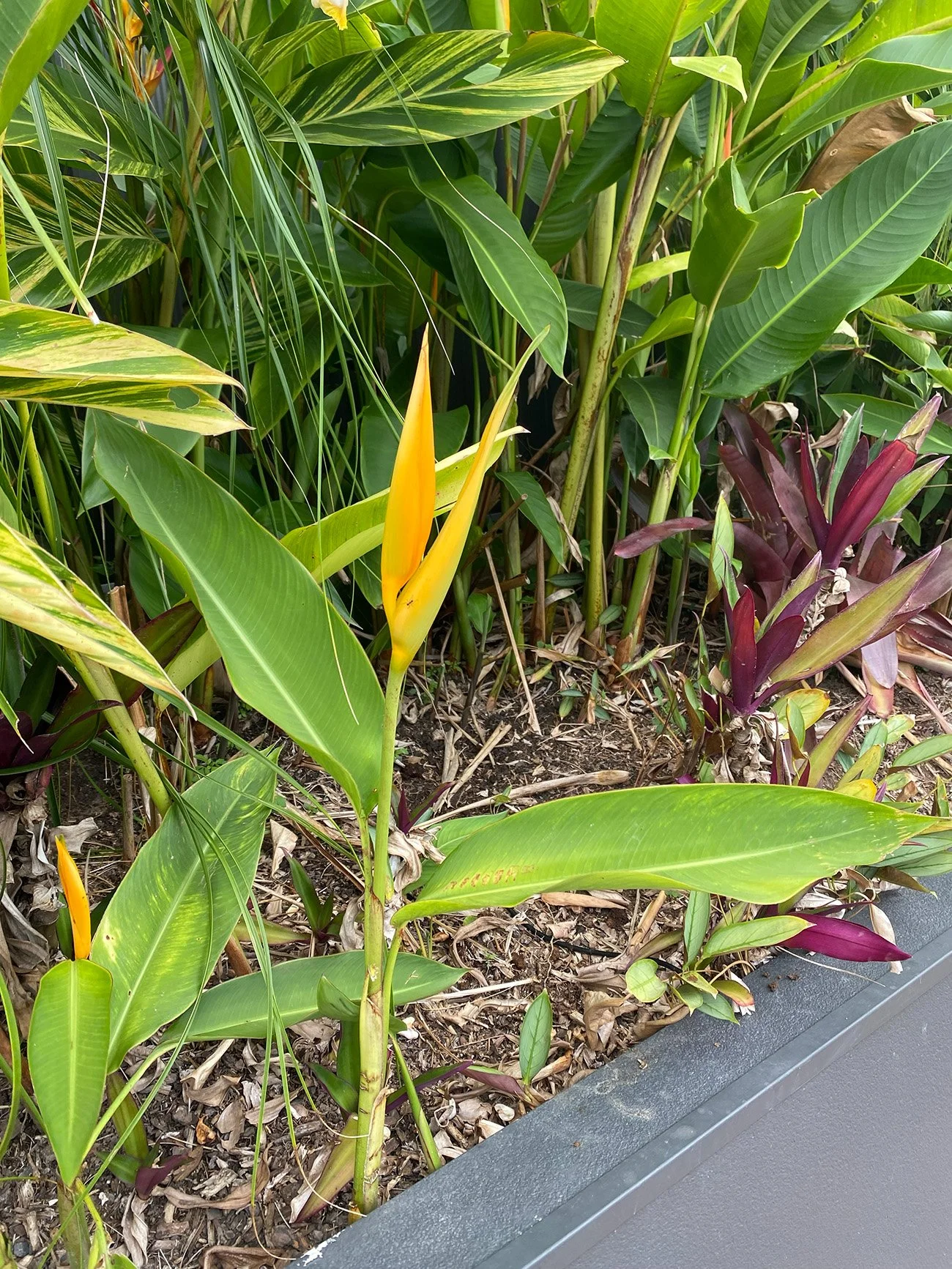
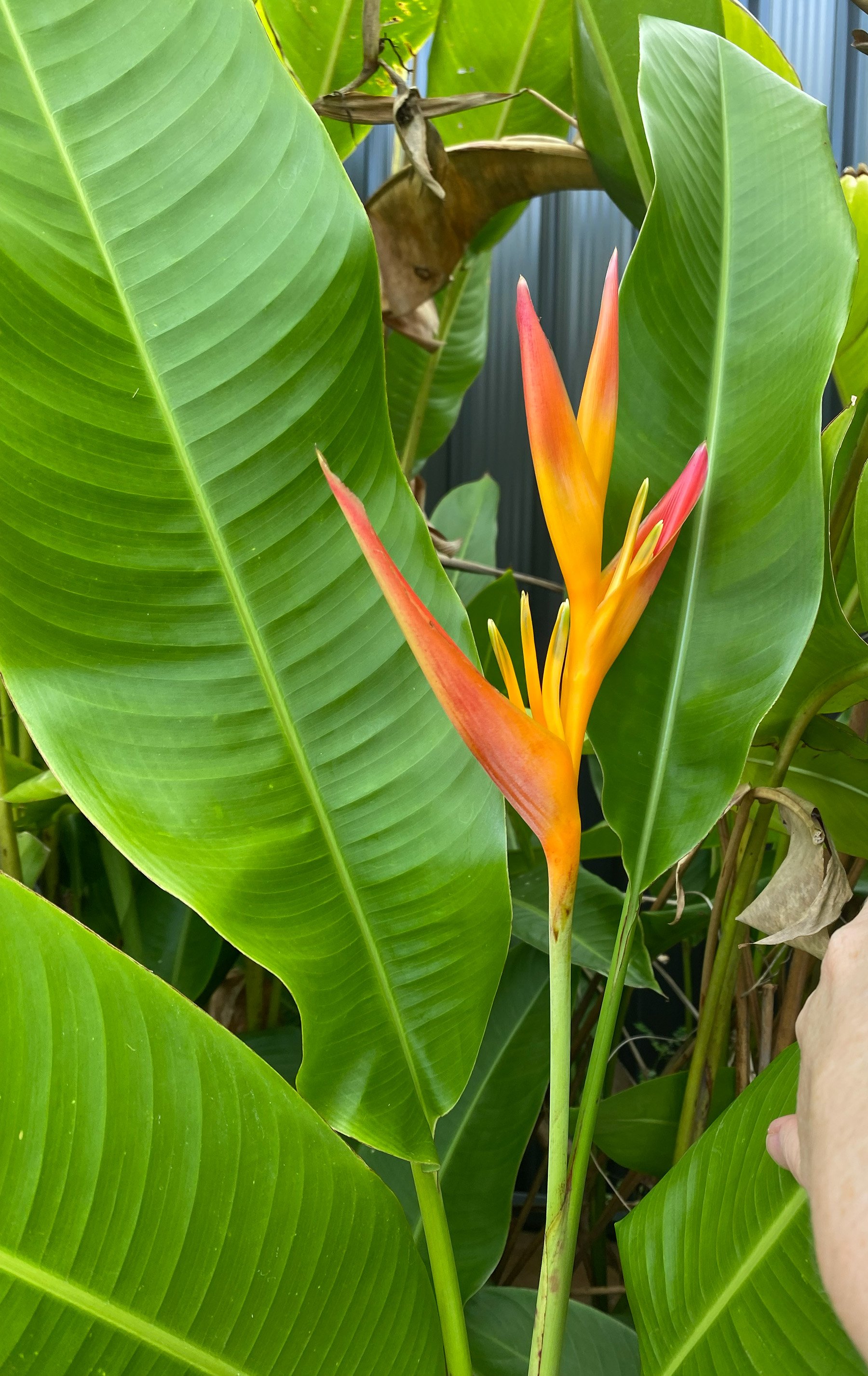
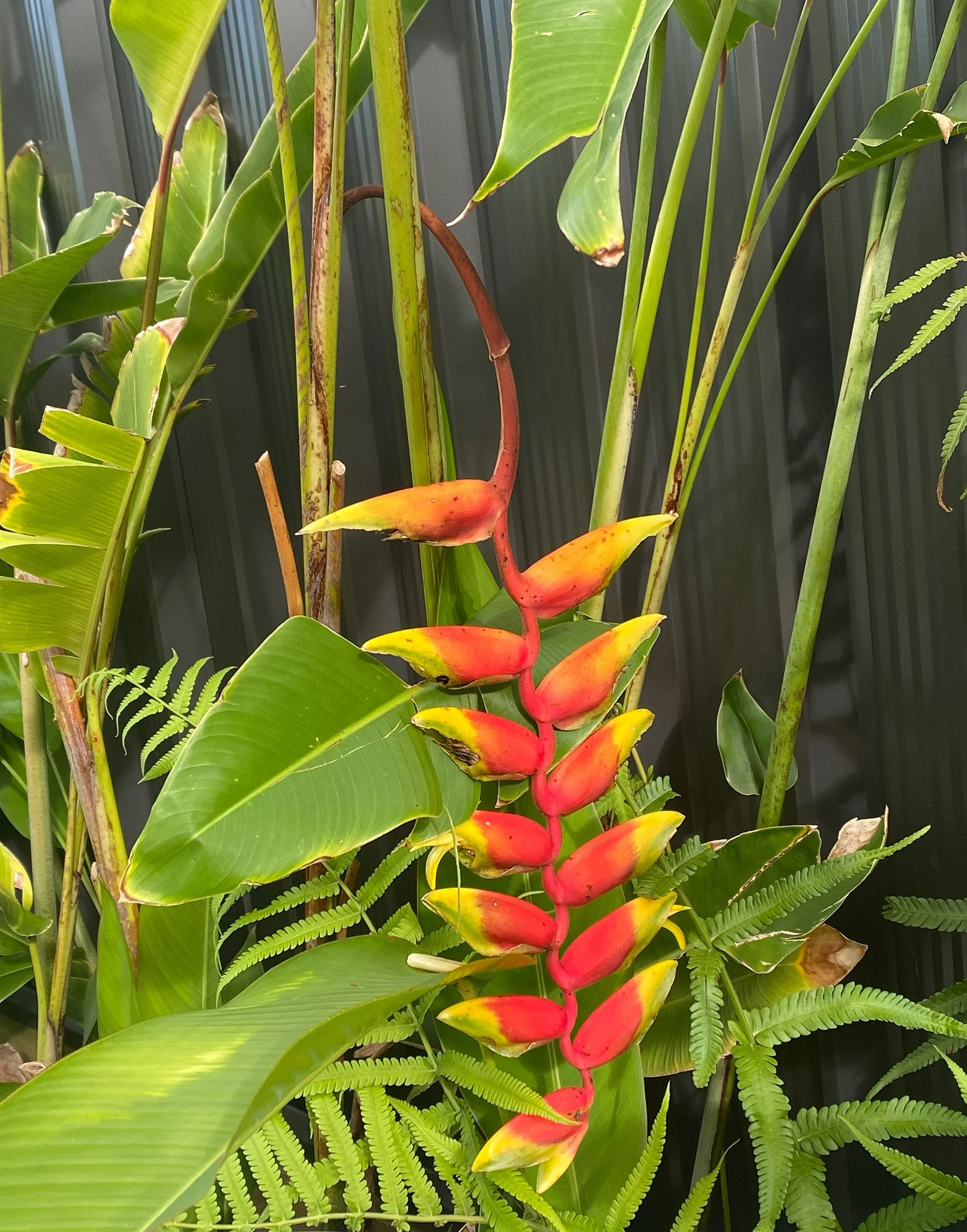
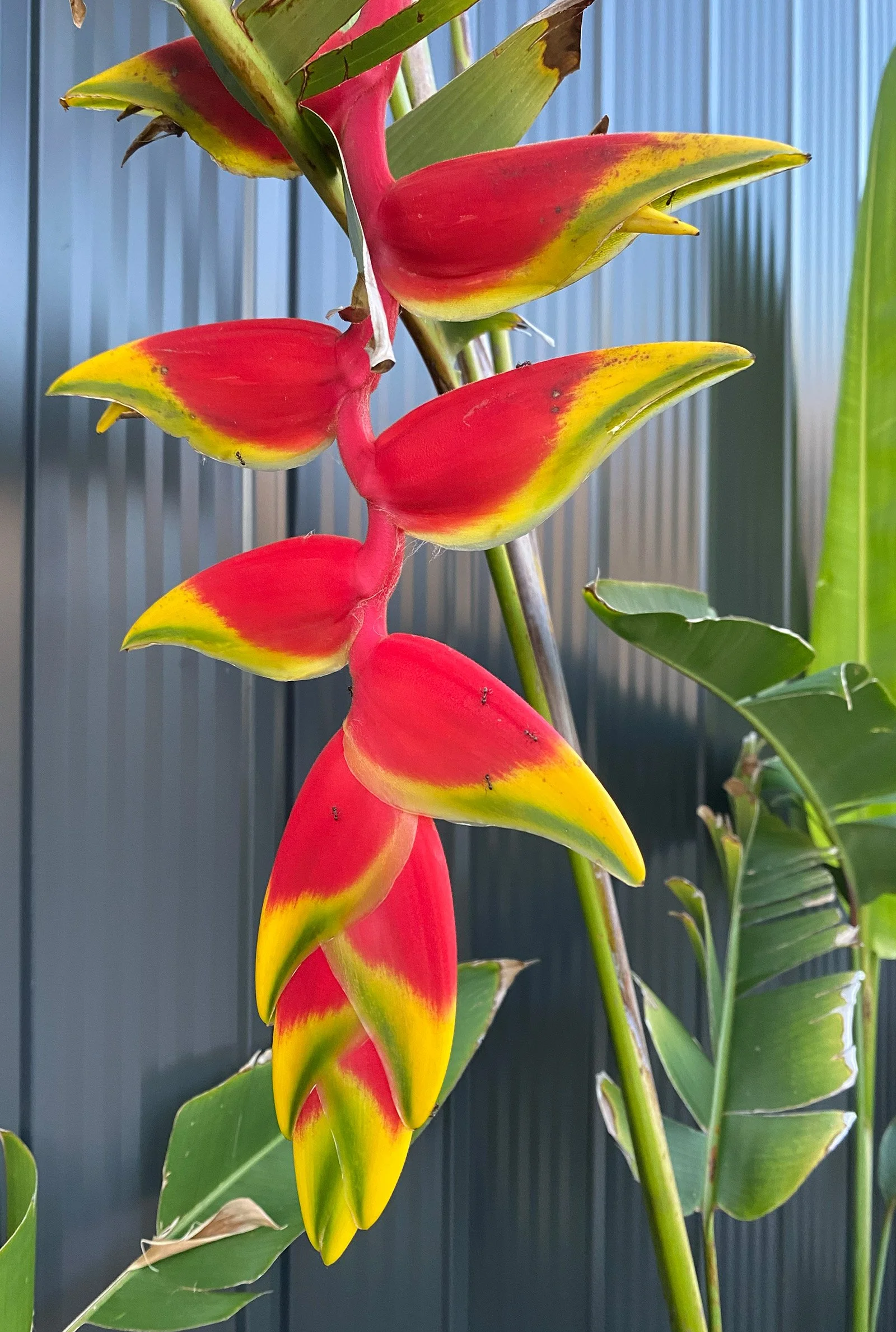
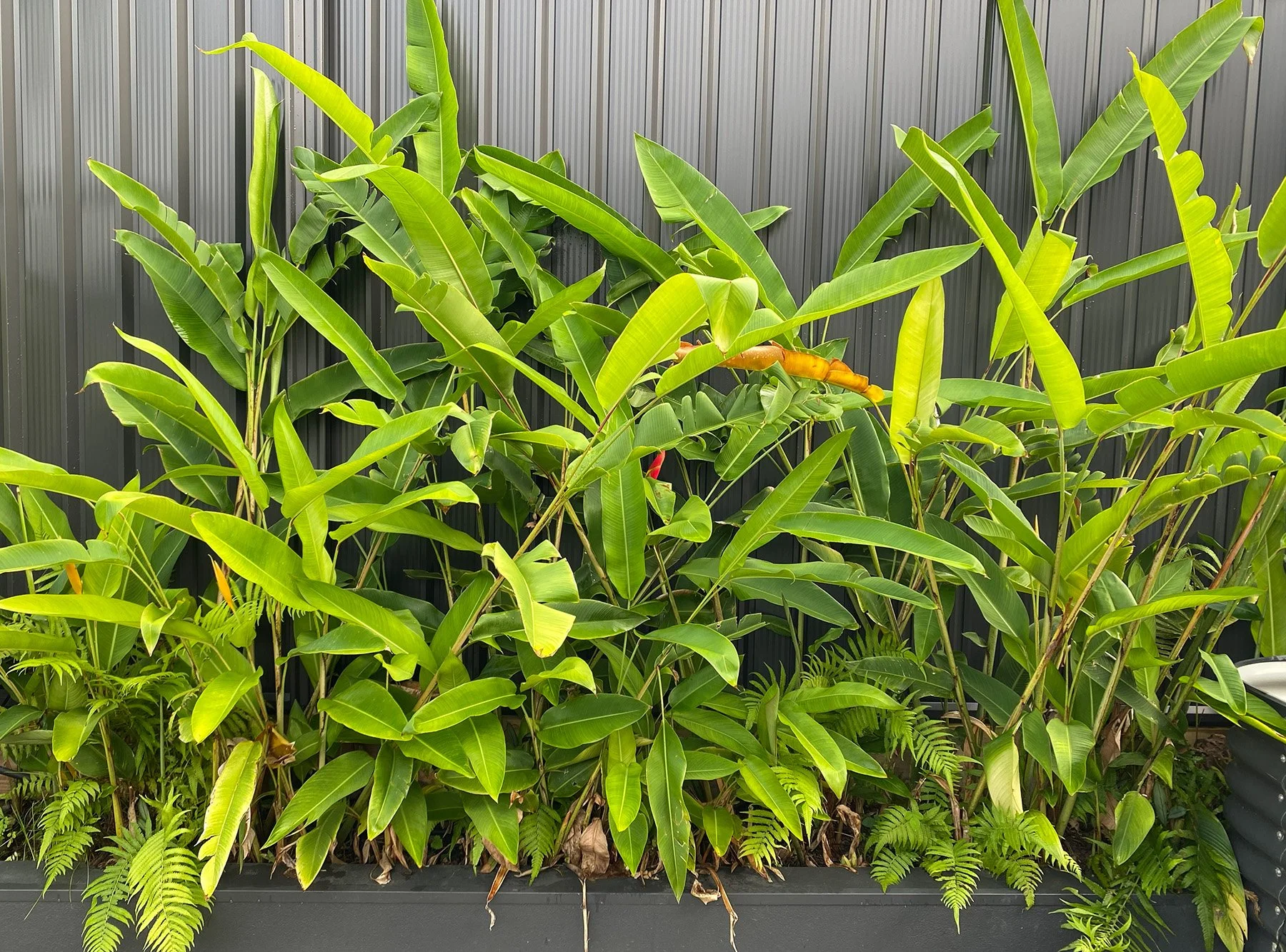
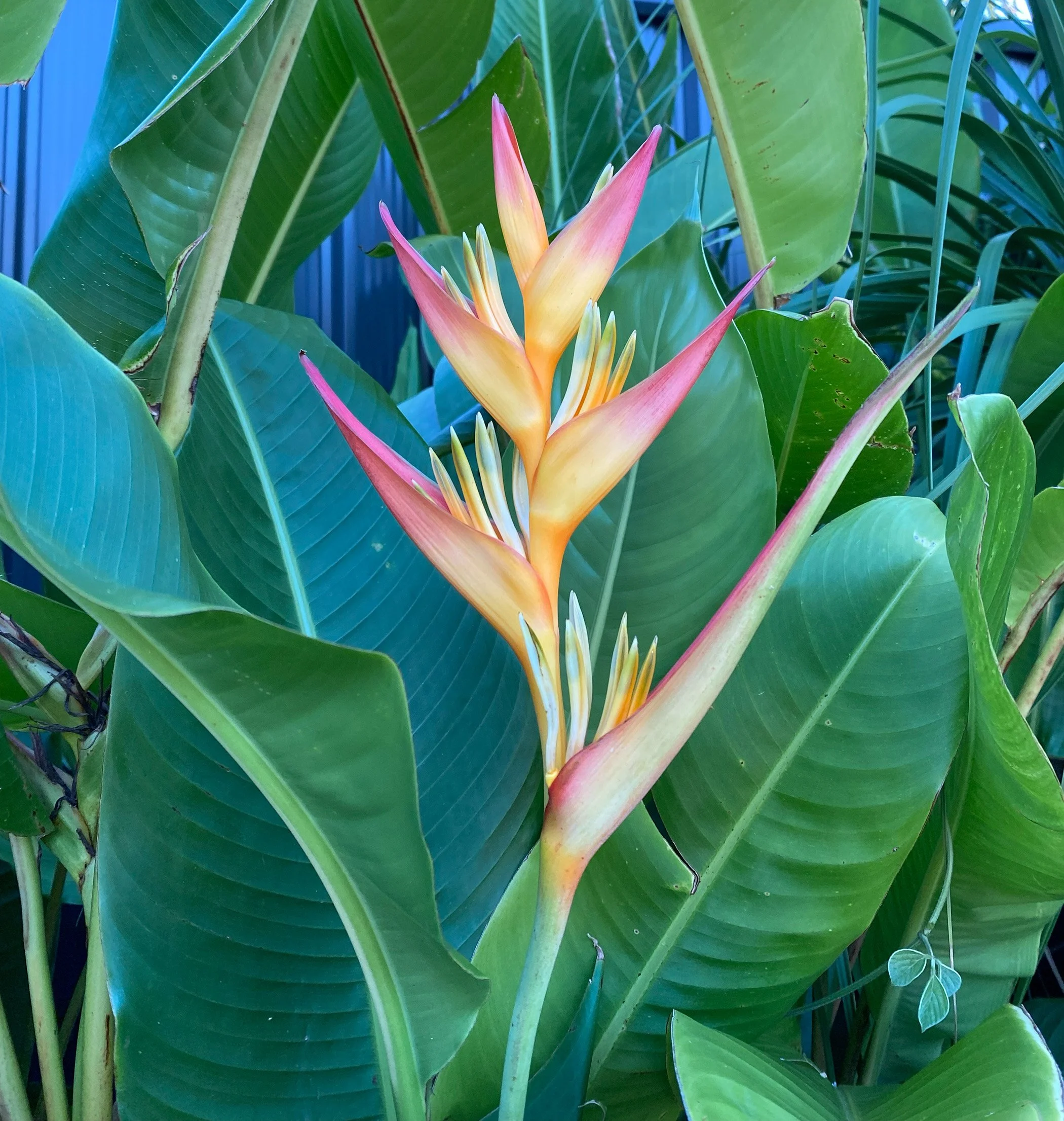
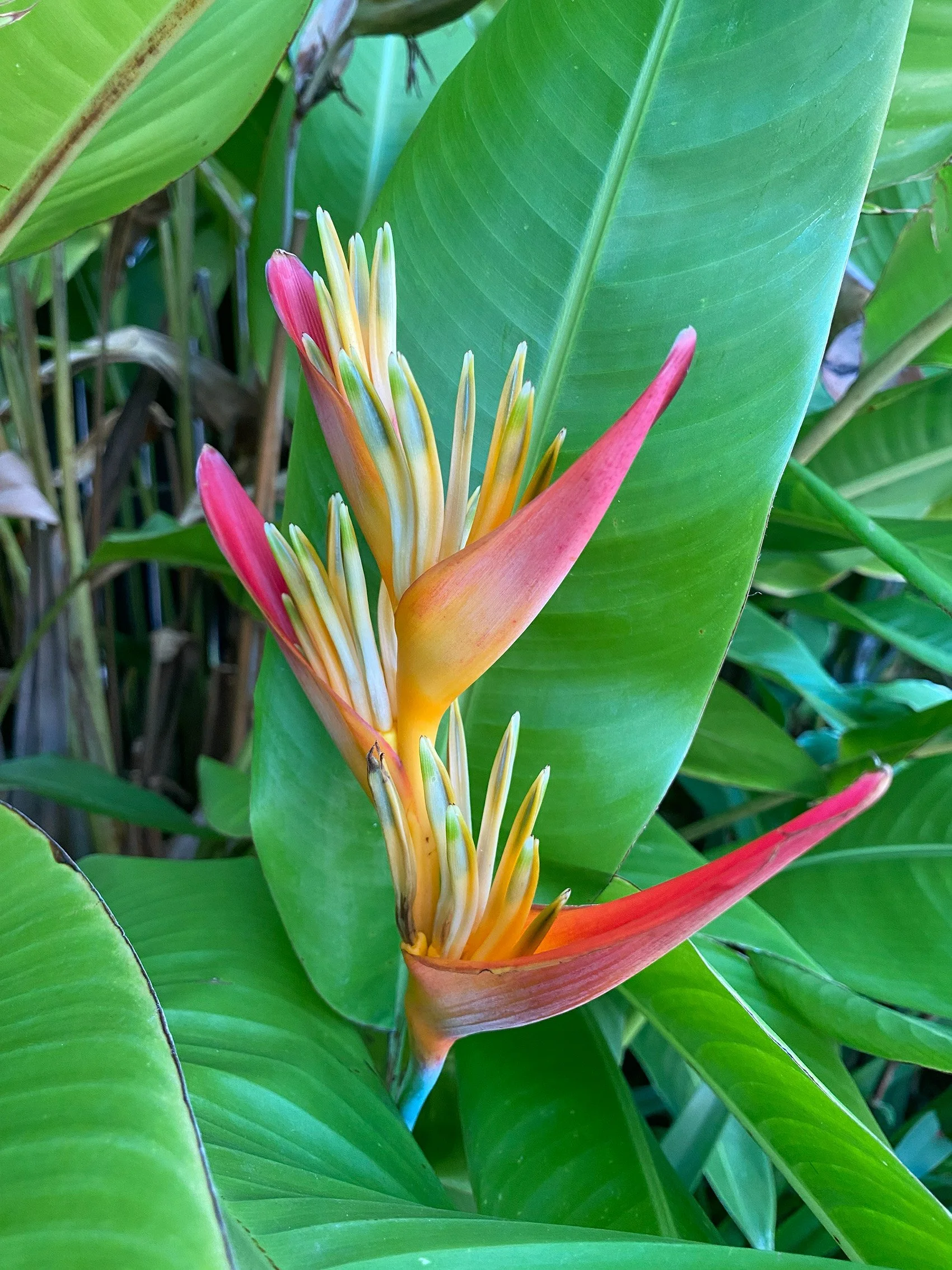
Four varieties grow among zingiber and cordyline, blooming from late spring to late summer (August to March). The tallest plants are Heliconia bihai x caribaea Black Cherry, rising well above the others. They have striking, deep red bracts. Next are the pendulous red and yellow H. rostrata (referred to as lobster claw or parrot's beak). The other two are similar in shape but different colours: H. psittacorum x spathocircinata Tropics has pink-orange bracts and Golden Torch has deep yellow bracts.
After some research, I discovered that what I thought was the flower is actually composed of a series of colourful bracts (modified leaves) growing in a zig zag shape. The true flowers are the small tubular structures growing out of the bract. The inflorescence grows from a pseudostem, so named because it is not a true woody stem but is rather made from tightly wrapped leaf bases. The lower part of the inflorescence below the first bract that joins onto the pseudostem is called the peduncle. The central axis from which the bracts emerge is called the rachis.
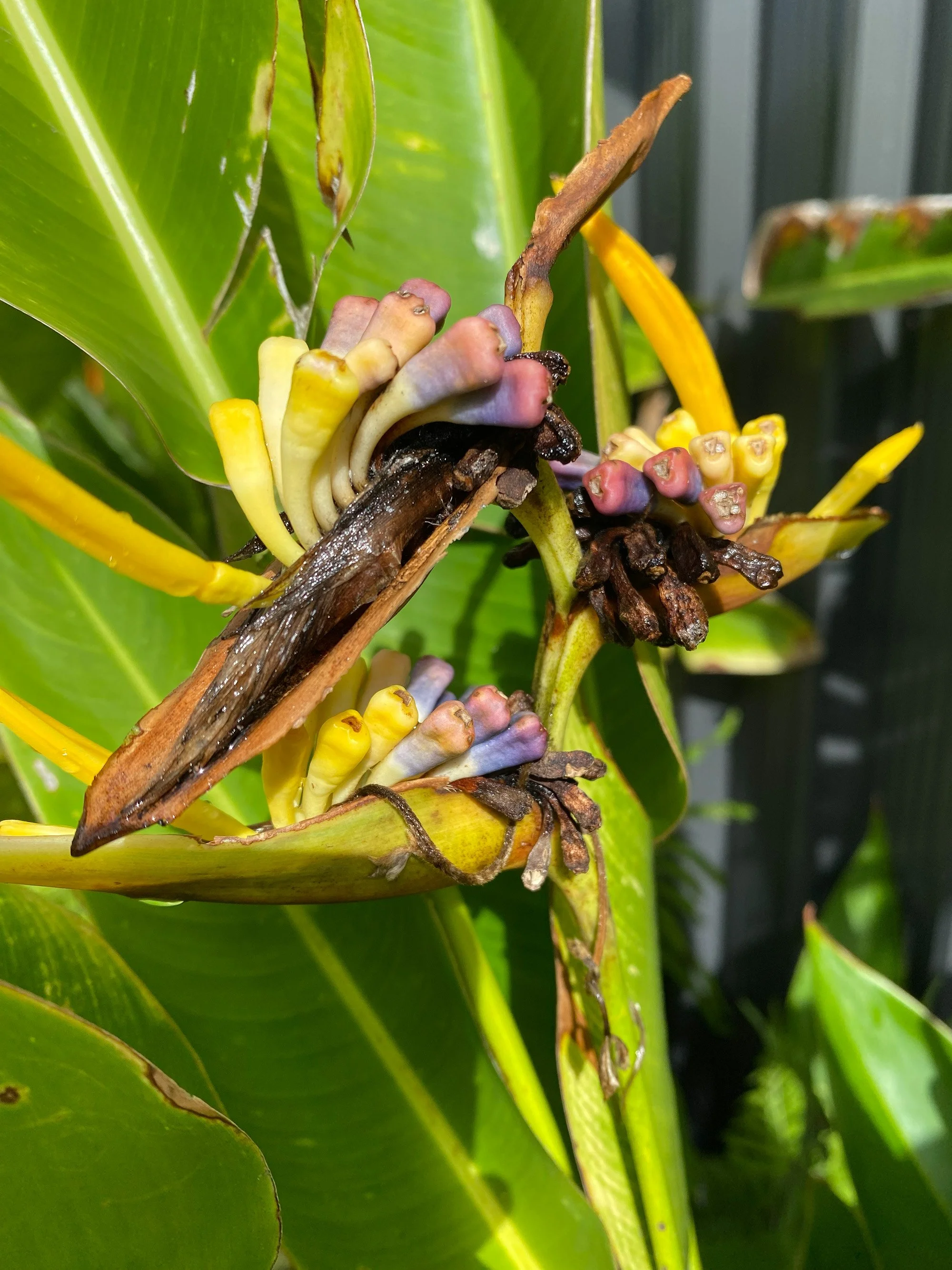
At the base of the flowers of the H. psittacorum x spathocircinata are tightly packed fruit which start off yellow and turn purplish-blue.
The plant propagates by sending up new shoots from the underground rhizome. In South America, the plant is pollinated by hummingbirds, but we don't have hummingbirds in Australia. I have rarely seen birds in the heliconias, except once or twice for the odd honeyeater.
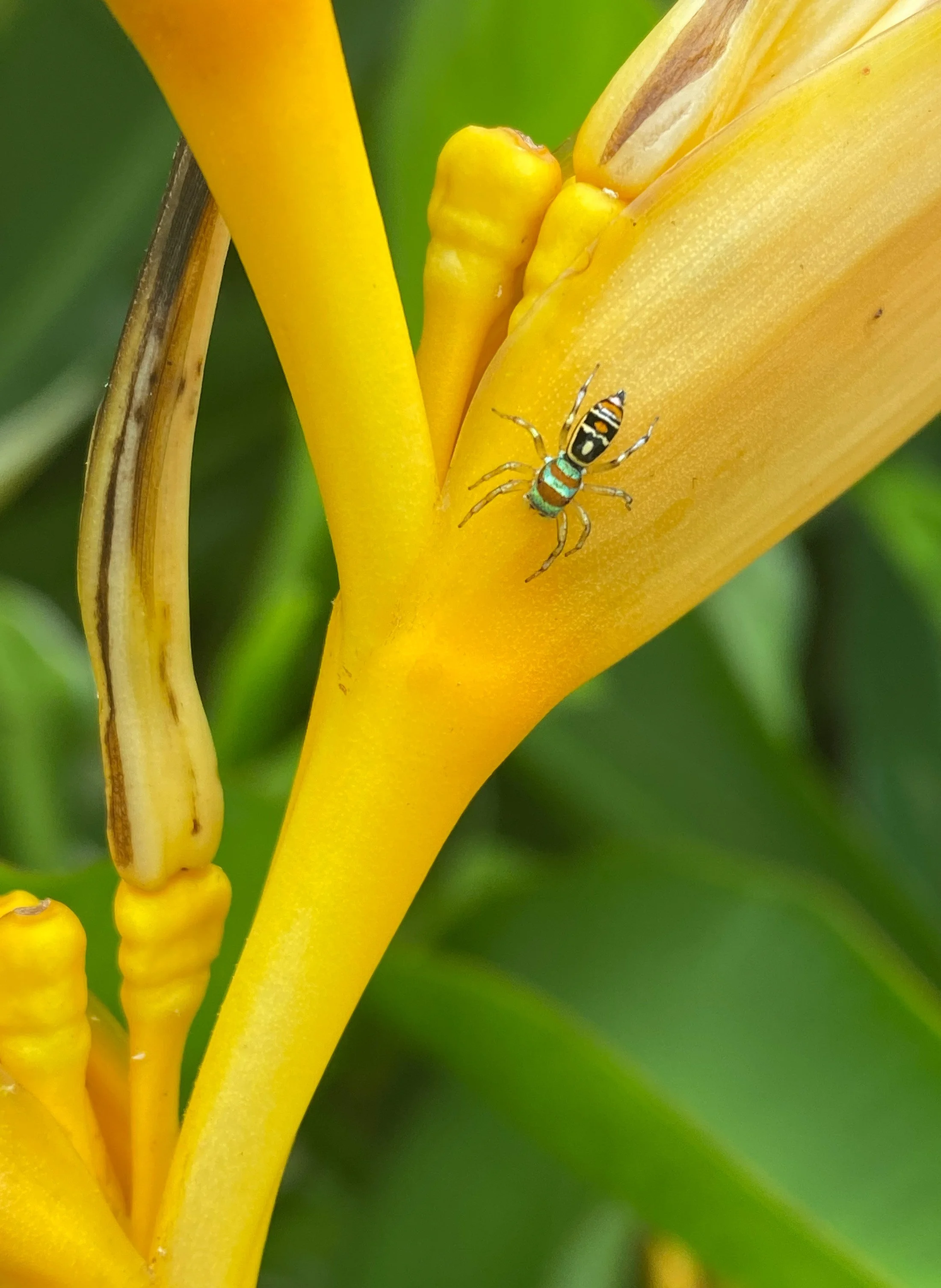
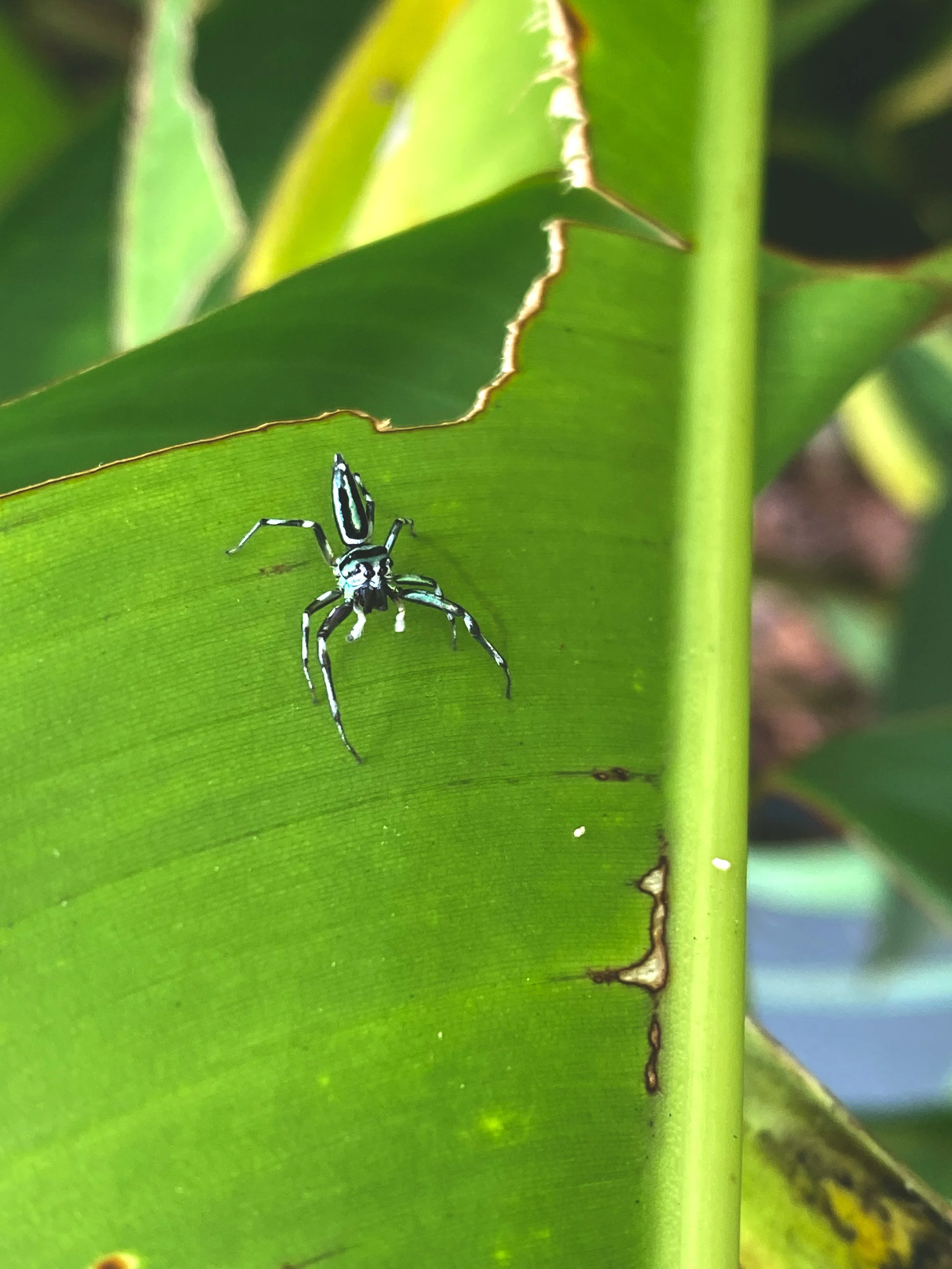
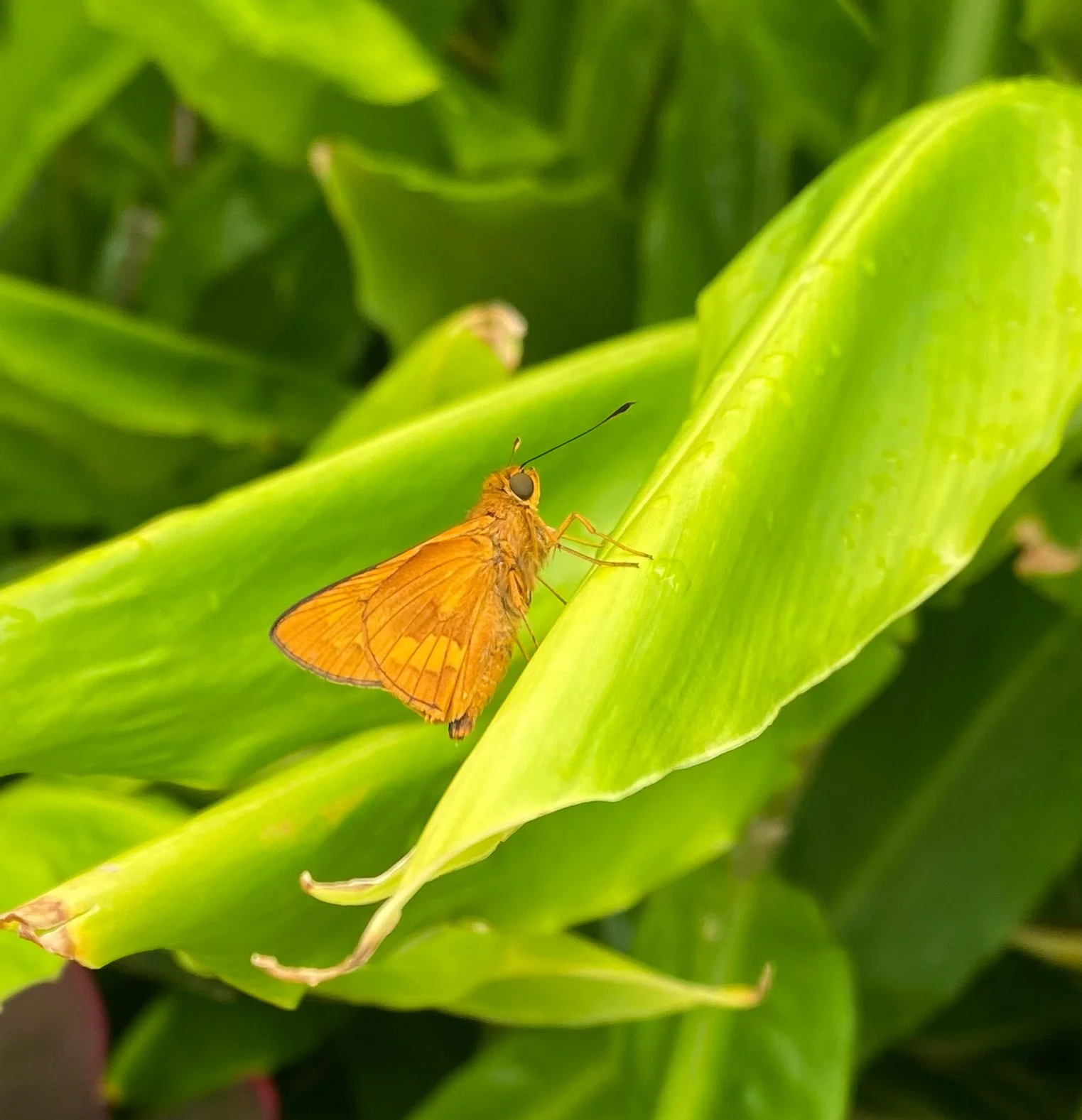
The heliconias are not alone. Ants move along the leaves and bracts. Grasshoppers chew through the leaves leaving the foliage in tatters (I am constantly on the lookout for these pests). The most striking visitor is the jumping spider Cosmophasis micarioides, which I often see perched on the orange bracts, both male and female. I also saw a small tree frog (Litoria caerulea) resting on the broad leaves and often spot an orange skipper butterfly resting on a leaf.
My heliconia grow in the raised garden bed bordering my backyard, among zingiber (also Zingiberales) cordylines, agave, bromeliads, and a large pandanus tree. Every year, the pattern repeats itself but never feels identical.
References
Wikipedia contributors. Skipper (butterfly). Wikipedia. https://en.wikipedia.org/wiki/Skipper_(butterfly). Accessed 4 March 2026.
Wikipedia contributors. Cosmophasis micarioides. Wikipedia. Cosmophasis micarioides - Wikipedia. Accessed 4 March 2026.
The Heliconia Guy. Heliconia search results. https://theheliconiaguy.com/search?q=heliconia&options%5Bprefix%5D=last. Accessed 4 March 2026.
Smith, R. R. (1968). A taxonomic revision of the genus Heliconia in Middle America (Doctoral dissertation, University of Florida). Retrieved from https://ufdcimages.uflib.ufl.edu/AA/00/03/00/16/00001/taxonomicrevisio00smit.pdf. Accessed 28 Feb 2026