Freycinetia scandens (Climbing pandanus)
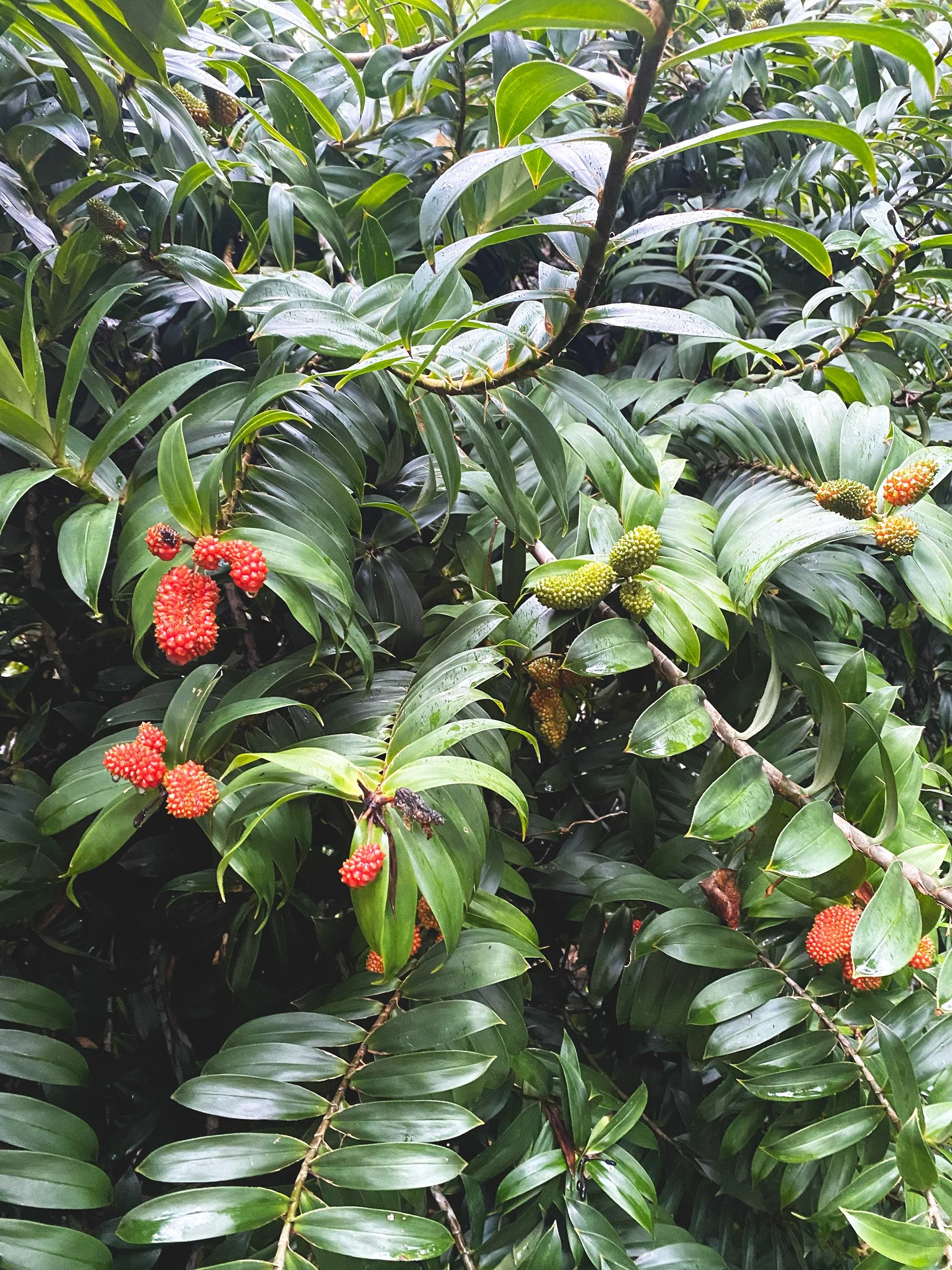
What first caught my attention was a cluster of bright red fruit, standing out sharply against deep green rainforest foliage. As I pass this plant regularly on walks, I began pausing to observe it more closely, gathering detail over several days. These photos and sketches document that process of noticing and identification of Freycinetia scandens in Rainforest Sanctuary Environmental Reserve.
Field notes for Freycinetia scandens
Sketches of Freycinetia scandens, showing climbing stems, aerial roots, leaves, male flowers, and developing fruit.
Habitat
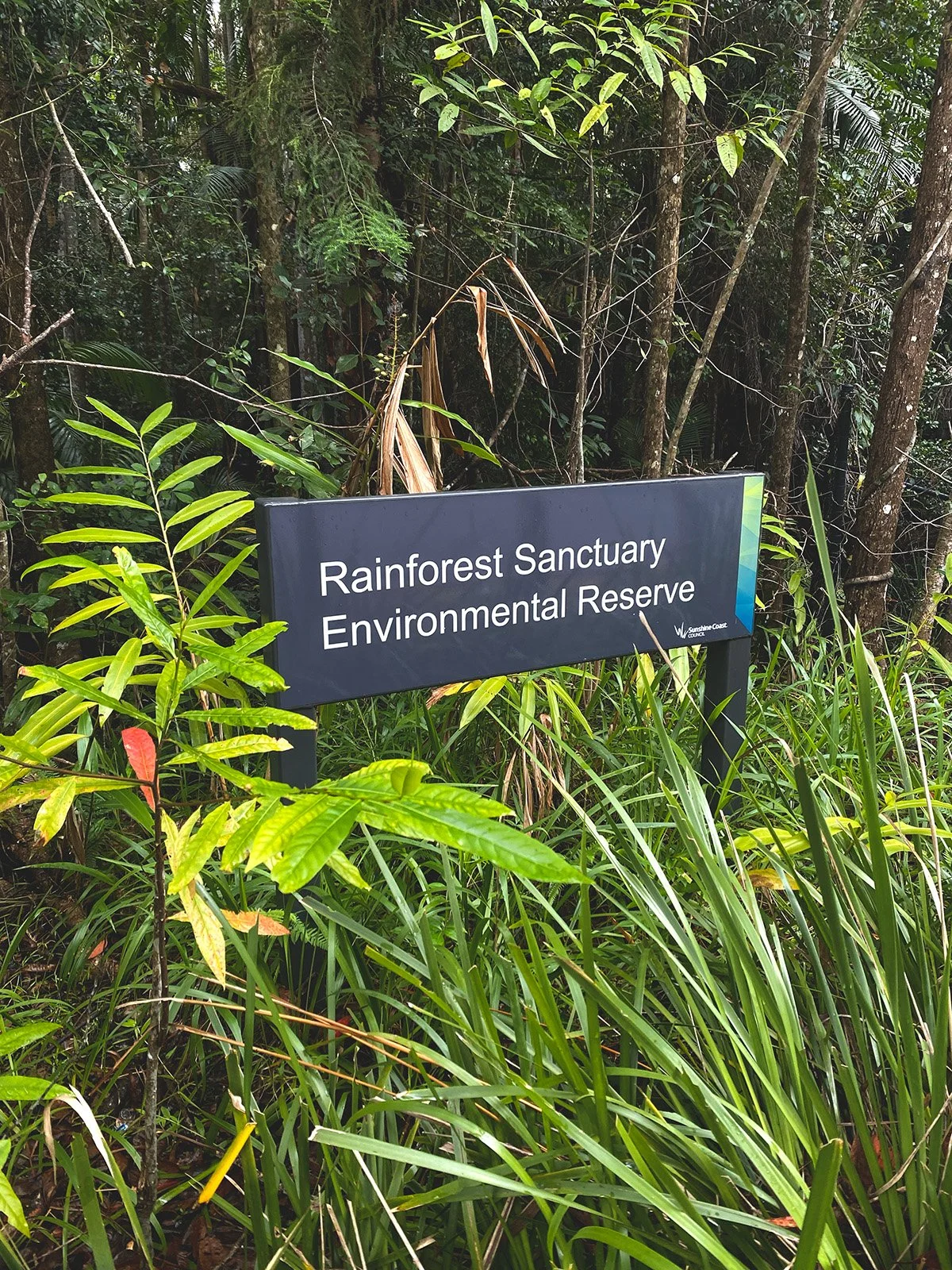
I first noticed the prominent red fruit of a profuse climbing plant in Rainforest Sanctuary Environmental Reserve, Buderim.
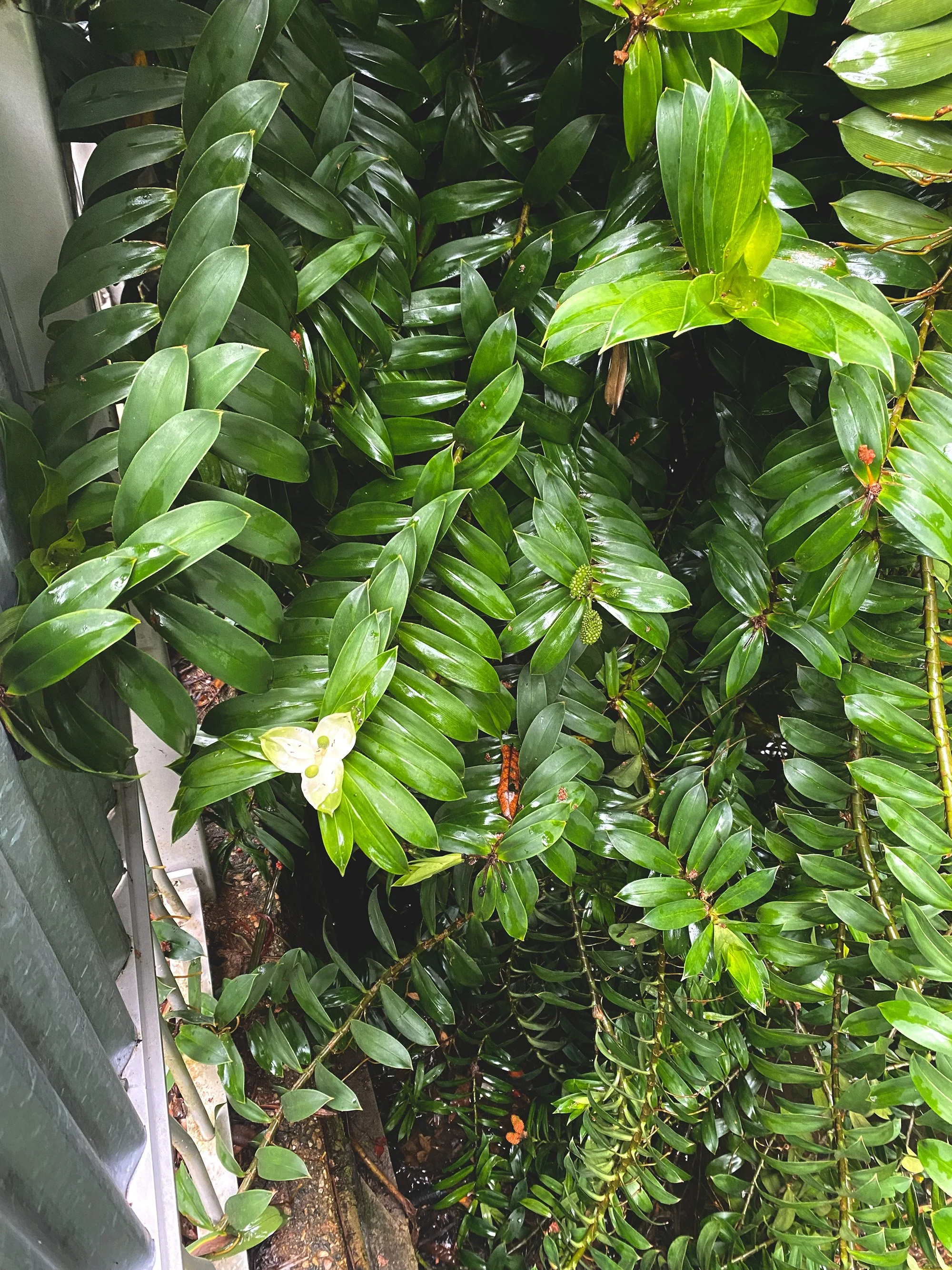
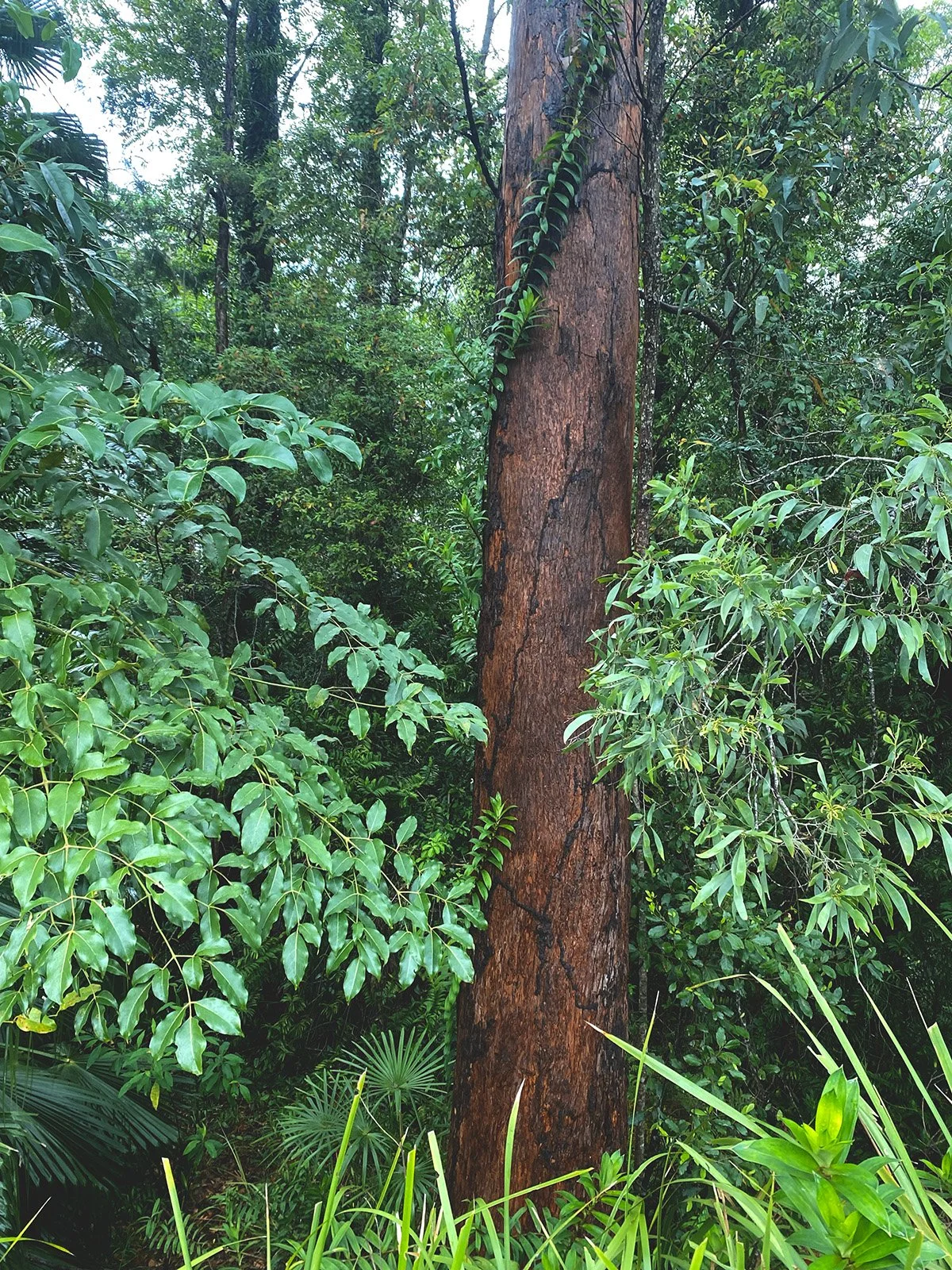
Growing profusely in moist roadside rainforest near a small stream and gully.
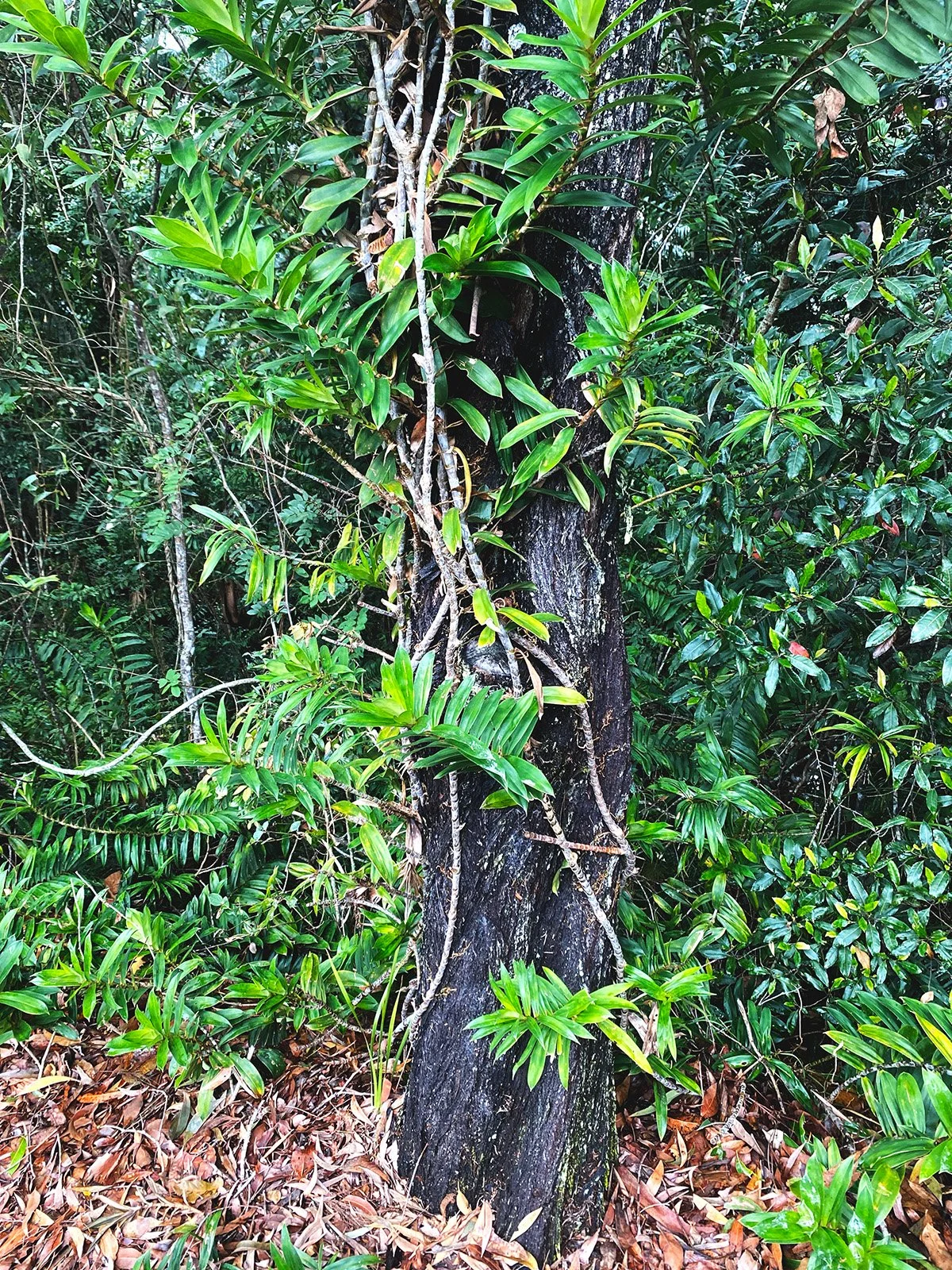
Plants occur on ground, over low vegetation, and high into canopy.
Dense patch ~4–6 m², becoming more scattered along road.
Climbs over and through other vegetation.
Branches, loops, and re-anchors as it grows.
Spreads laterally as well as vertically.
Subsequently, I’ve observed Freycinetia further along the creek as well as in the rainforest adjacent to Stringy Bark Road. In all locations, it was growing next to a creek and climbing up trees or along the ground.
Identification
To identify the plant, I used image recognition tools as a starting point, then cross-checked the result against multiple online botanical sources and field descriptions.
Stem
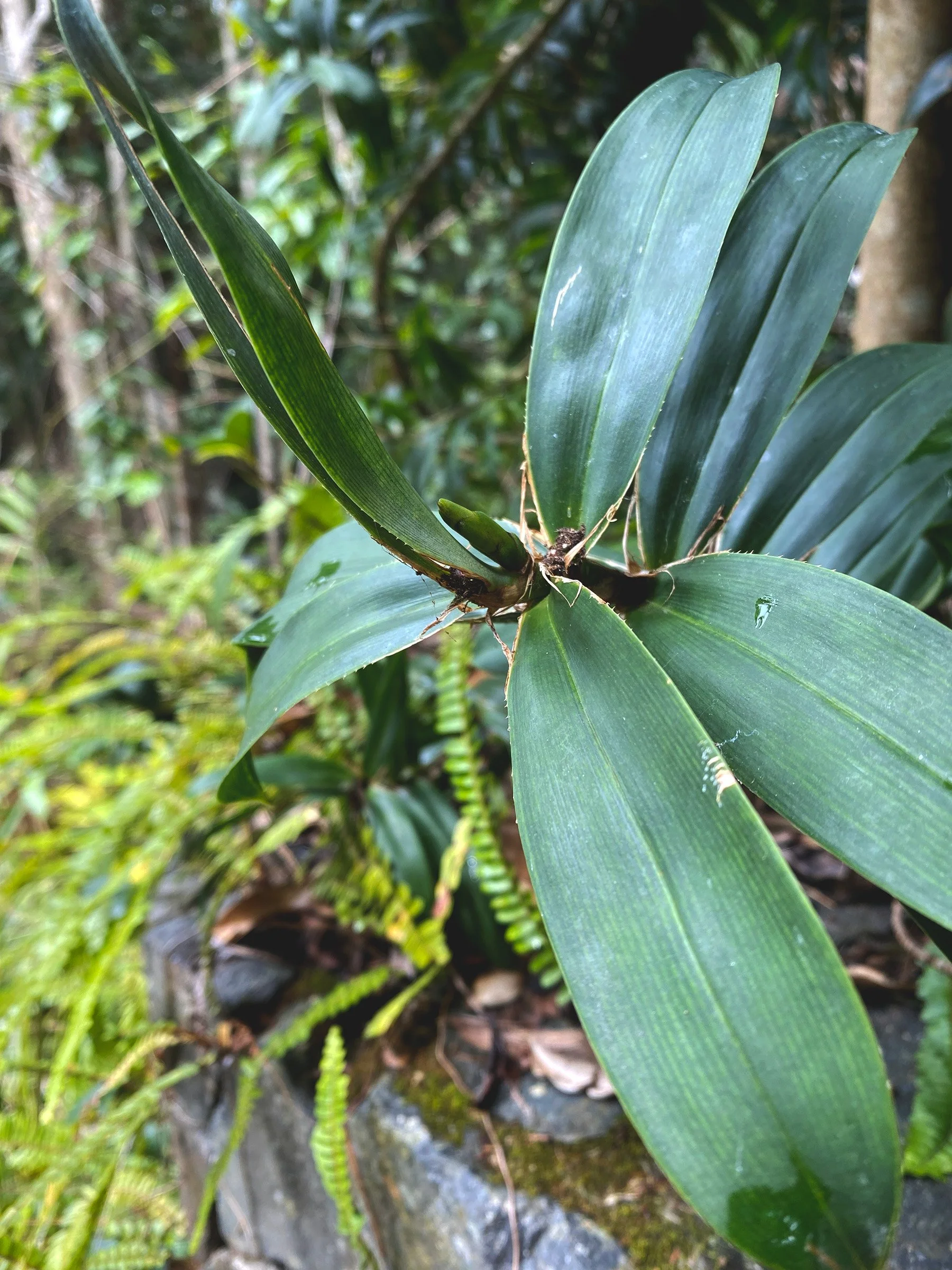
Climbing woody stem wrapping around. Aerial roots.
Leaves
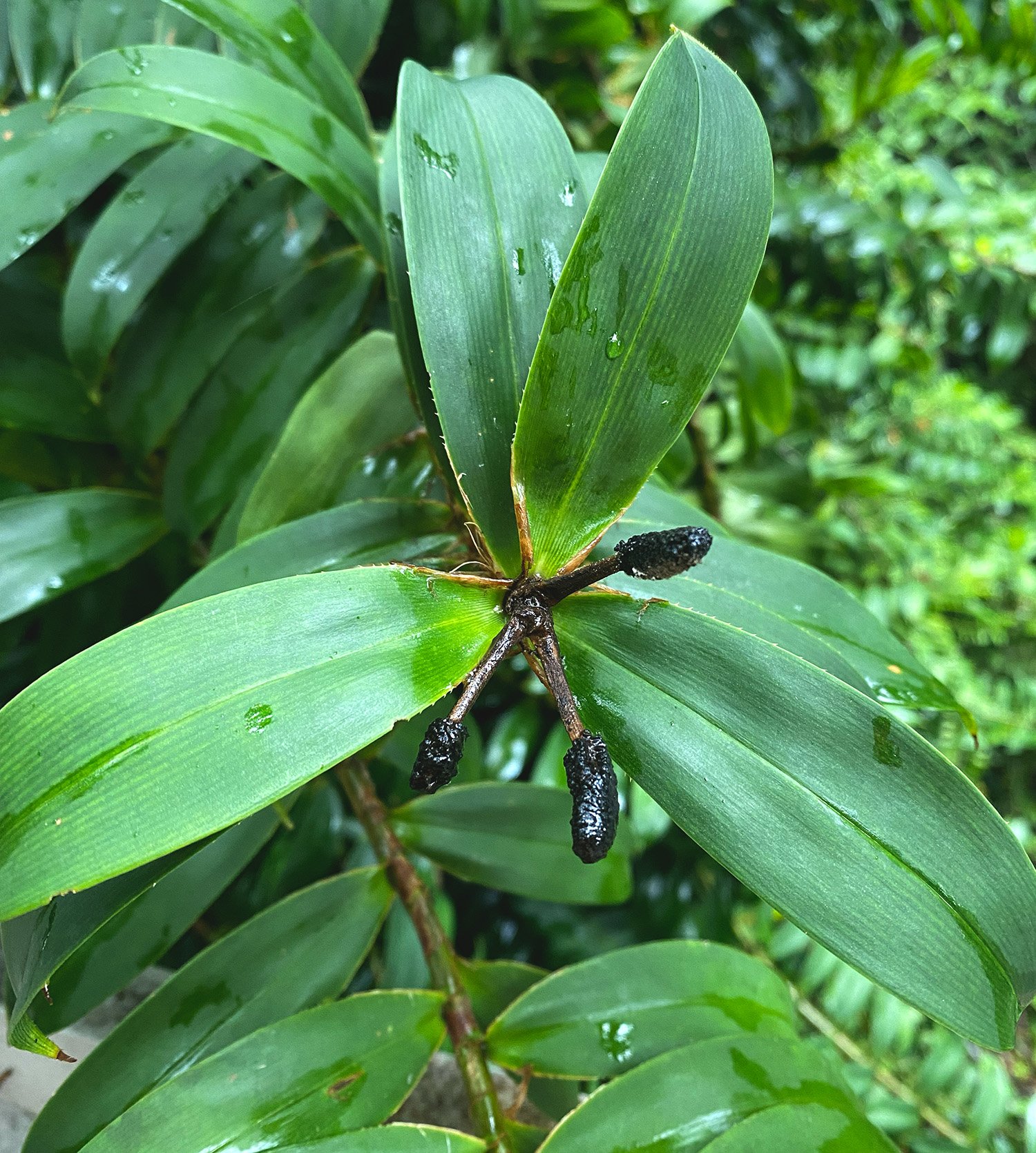
Leaves attached directly to stem (no stalks)
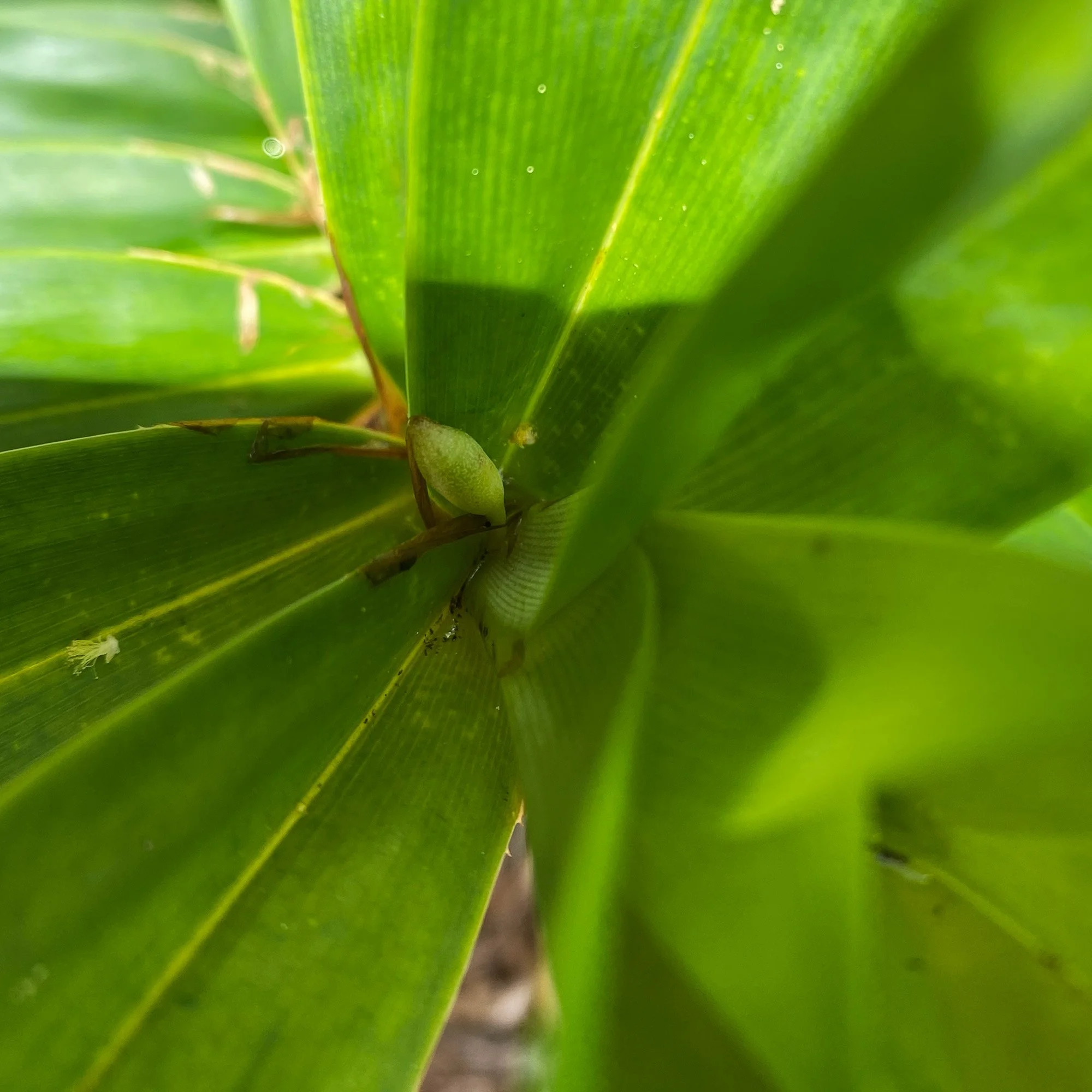
Clear three-rank / triangular arrangement of leaves in space
Simple parallel veins
Reproduction
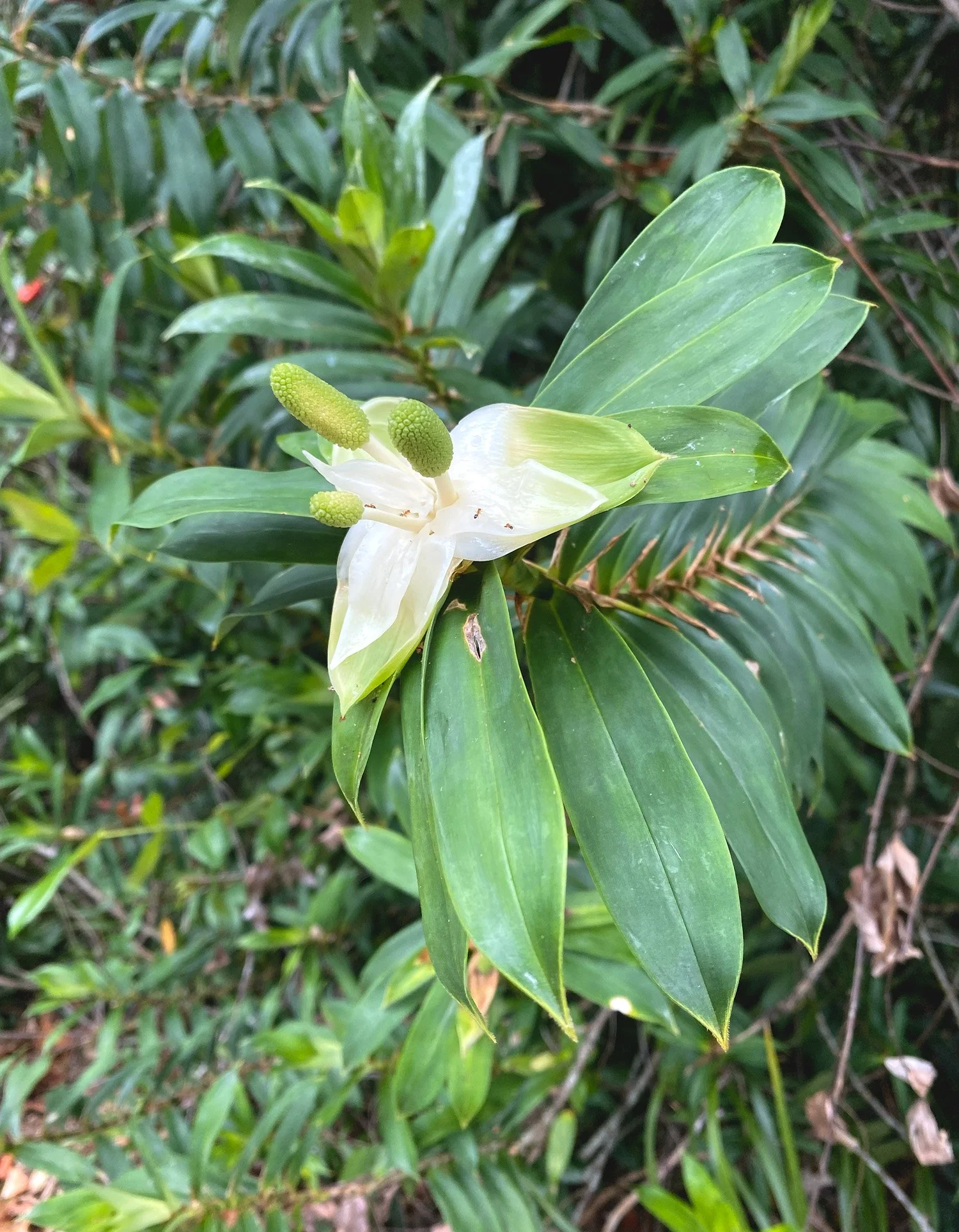
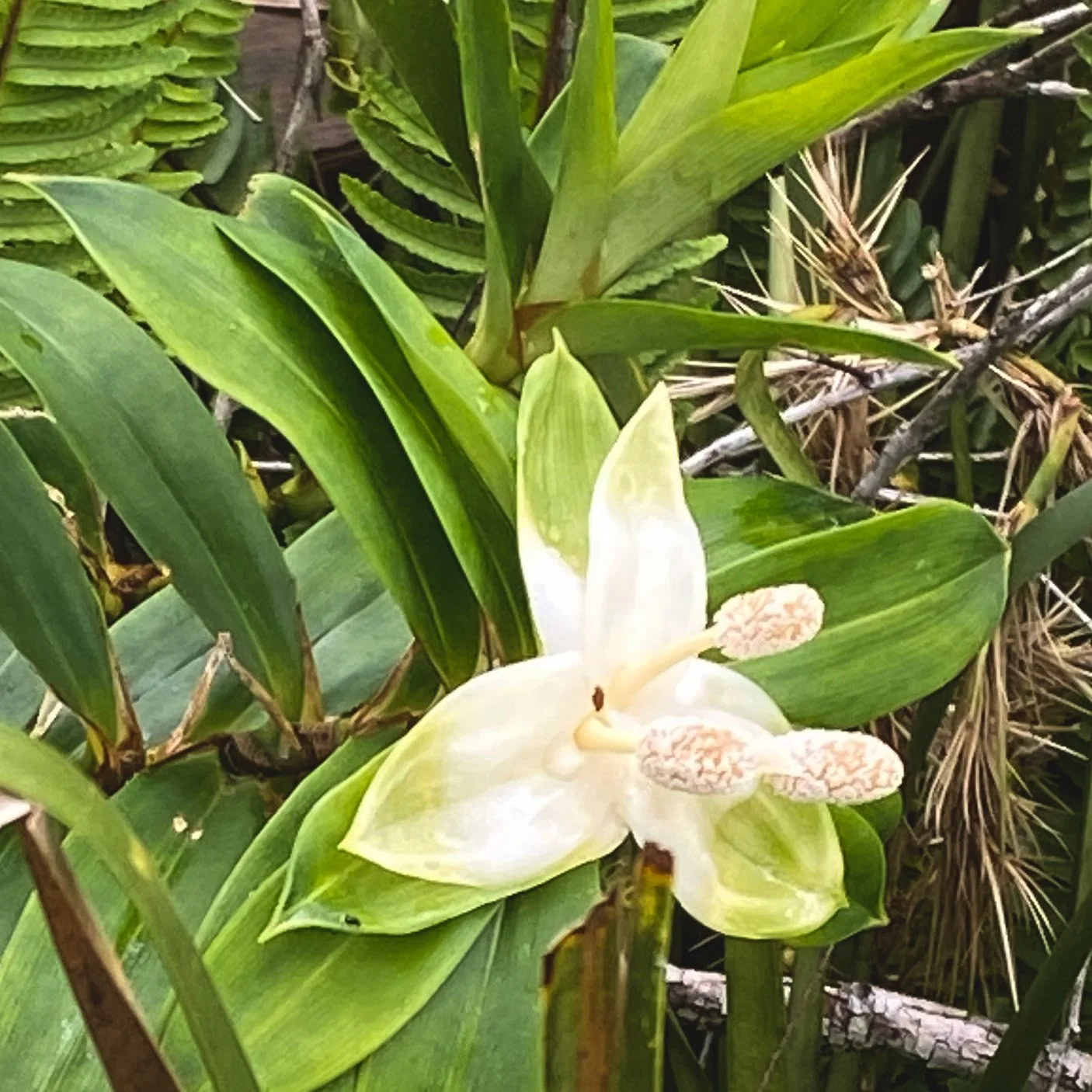
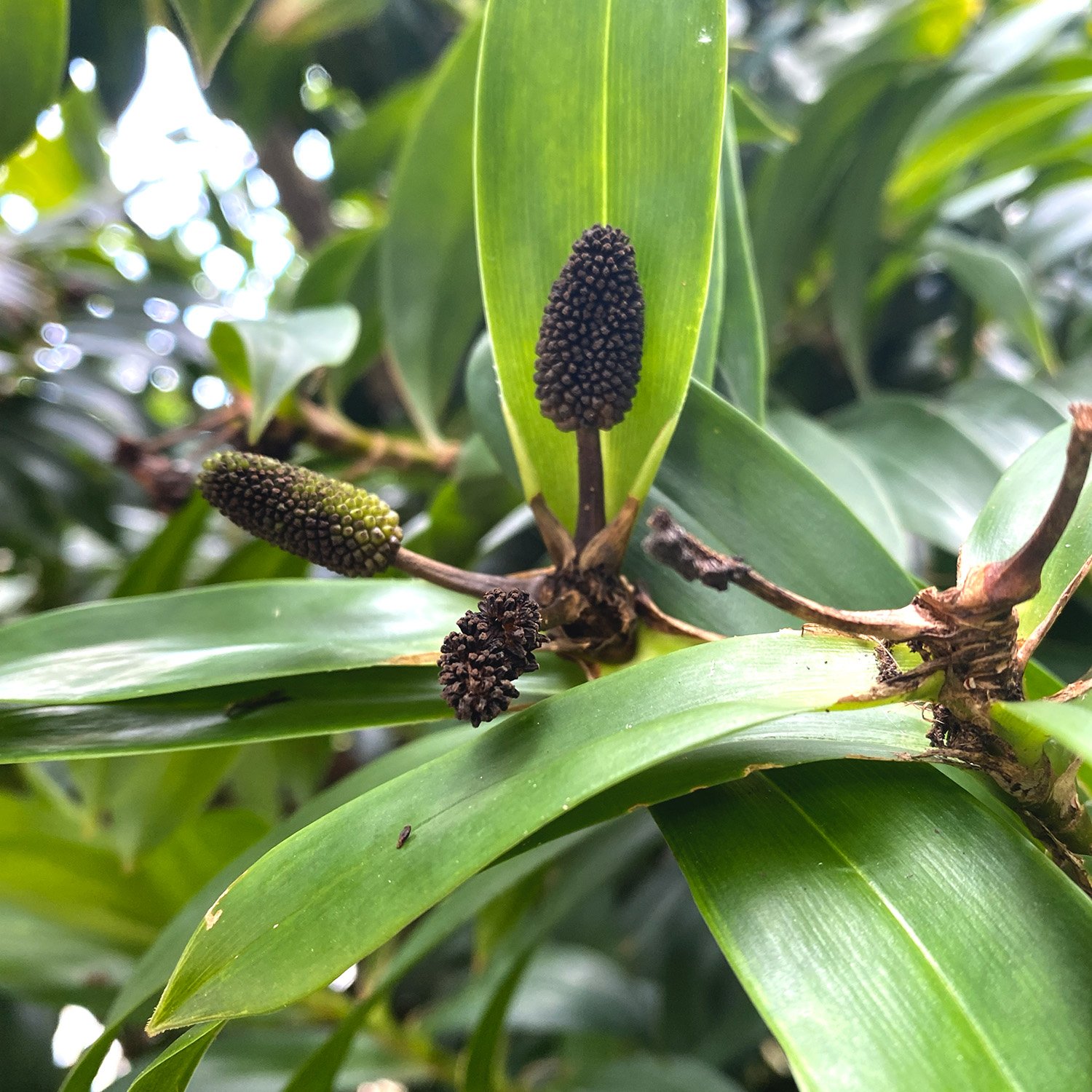
Freycinetia species are dioecious, meaning male and female flowers occur on separate plants. Only female plants produce fruit, following pollination from nearby male plants. In this location, male flowers and female fruit were observed growing closely intertwined, suggesting effective local pollination, likely by insects such as ants or flies which were both observed on the flowers.
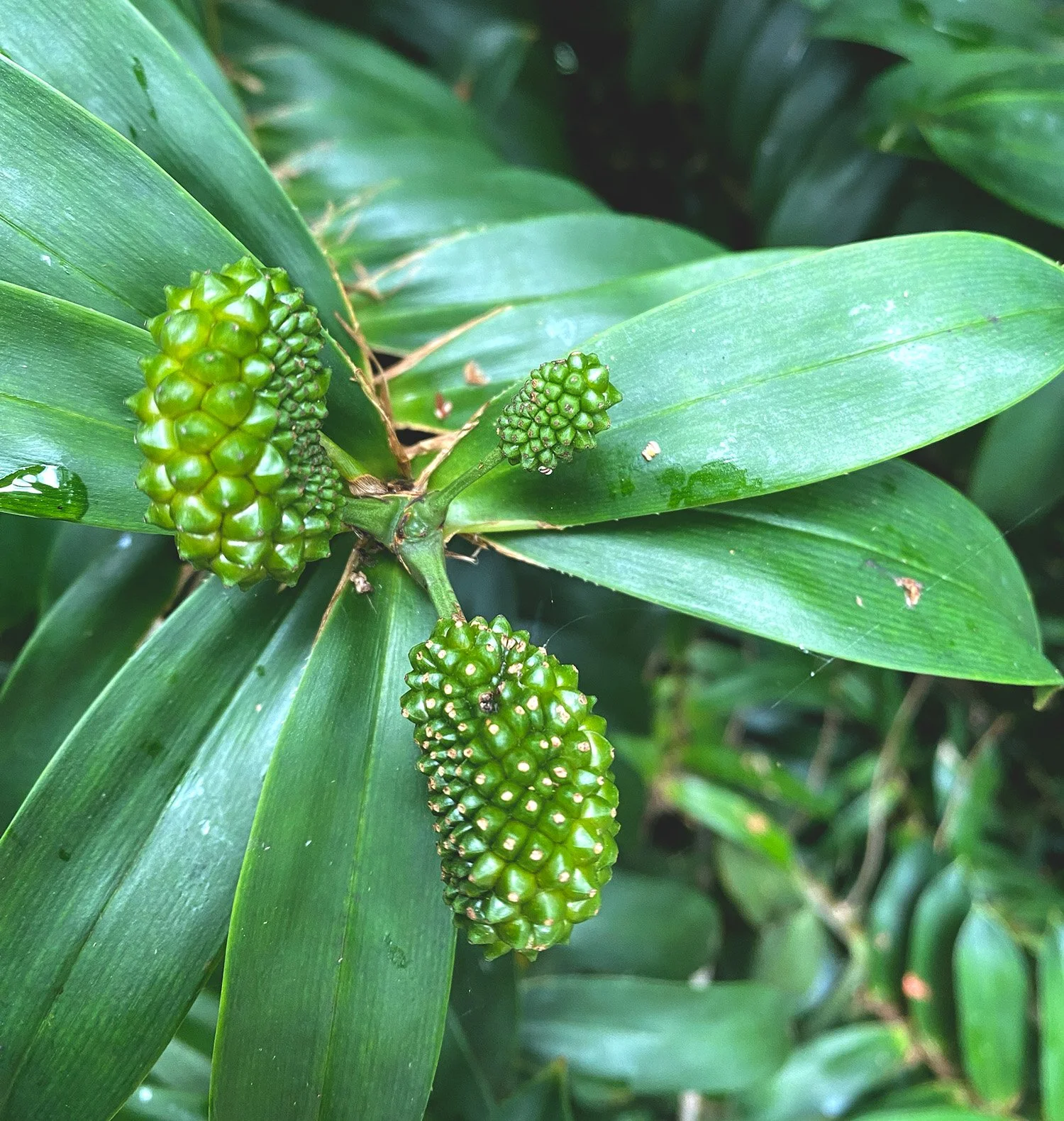
The male flower has green staminal clubs, white bracts, at first and the pollen is released later. At first, I mistook the green staminal heads for developing fruit. The stamens shrivel up and turn black later (look like used matchsticks).
Fruit & seeds
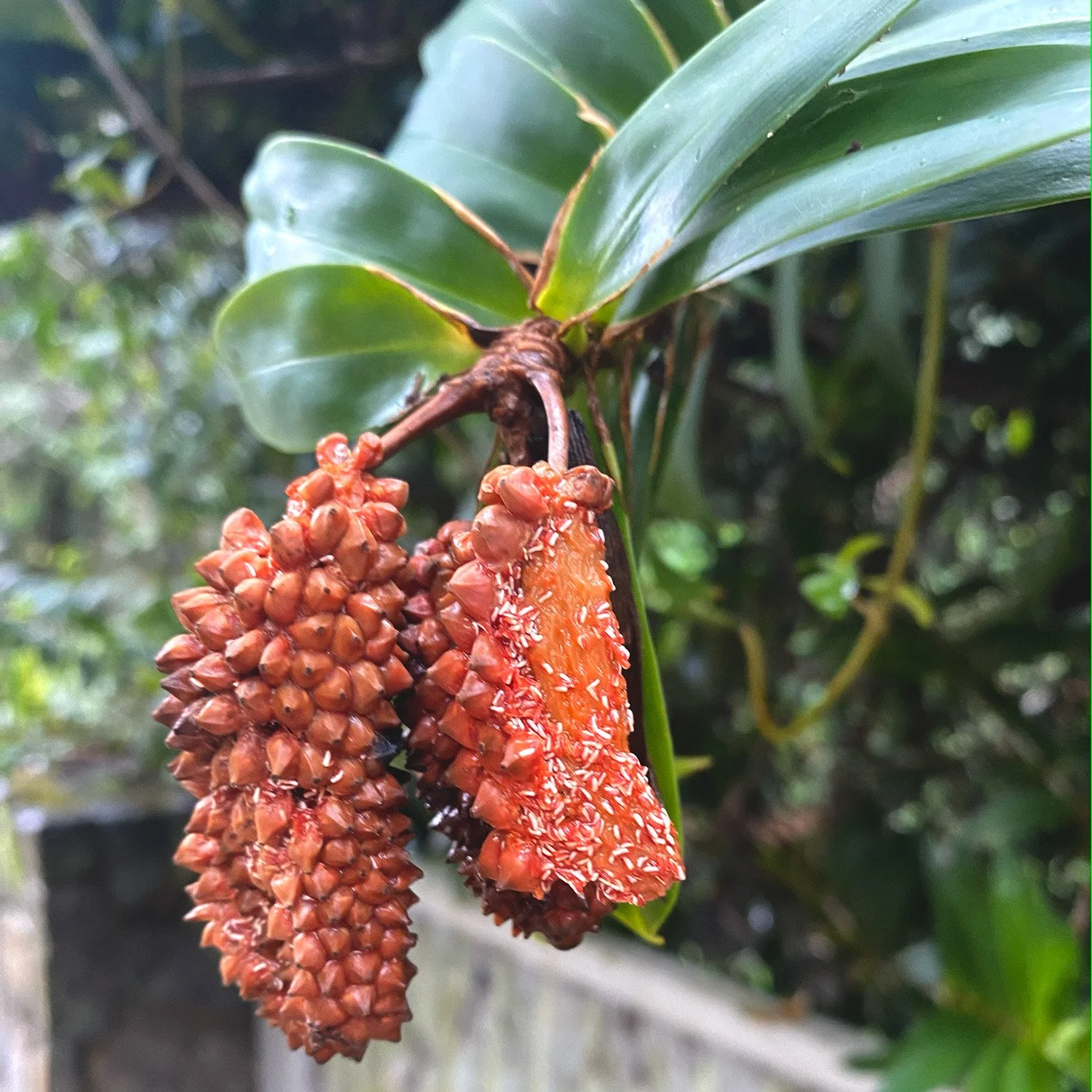
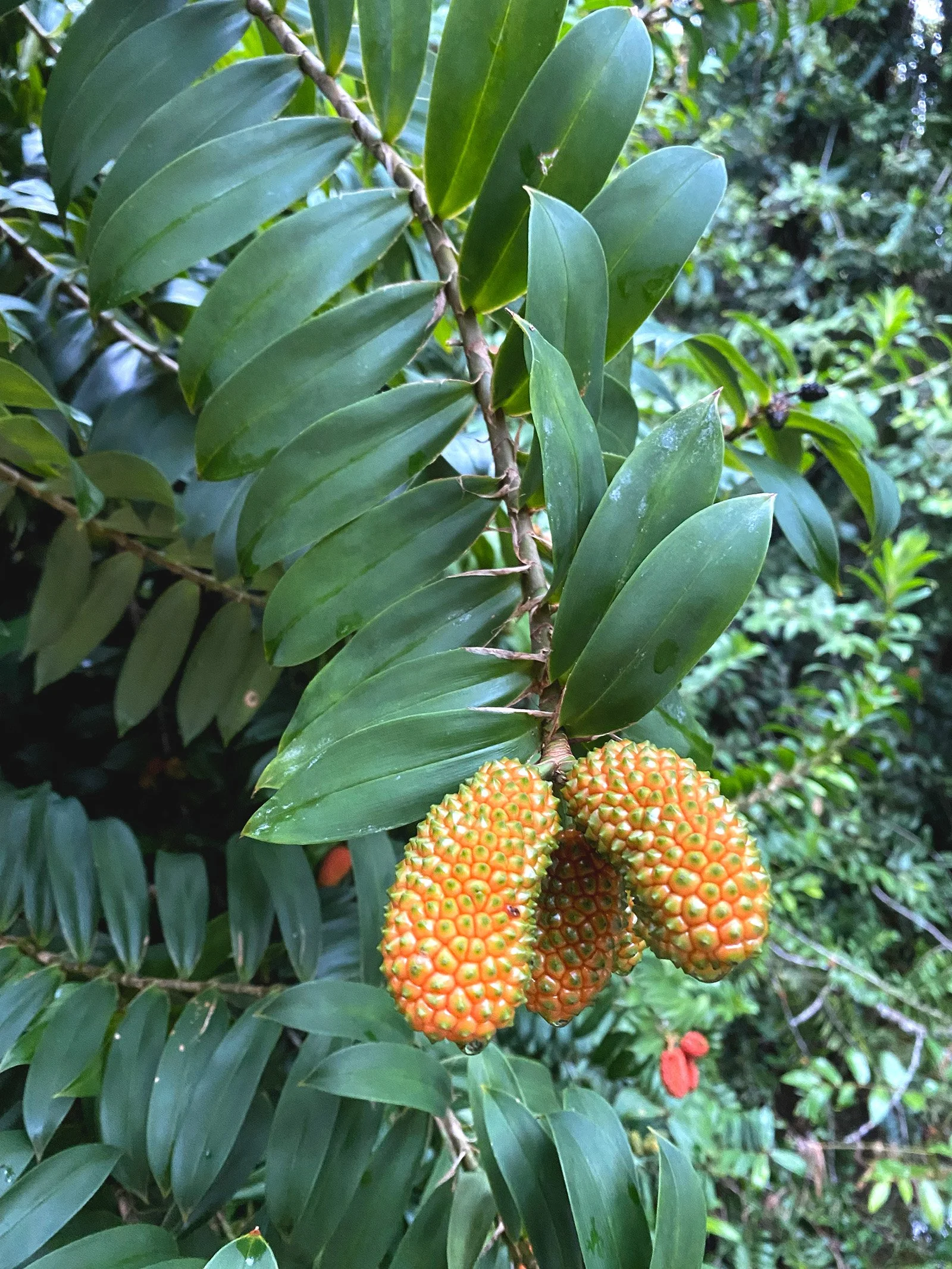
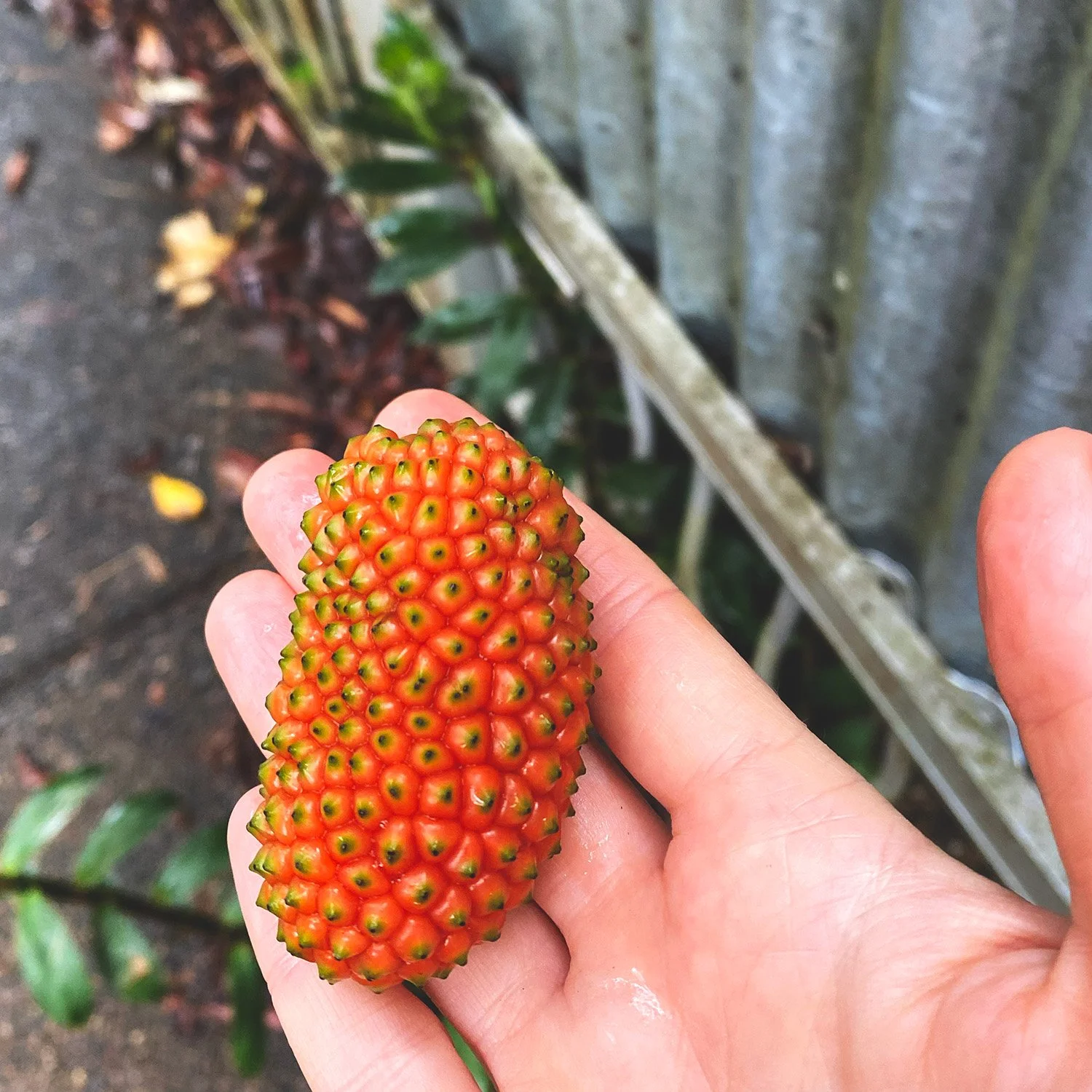
Fruit a compound syncarp — many tightly-fused berries.
Each berry contains multiple seeds.
Sweet scent when ripe.
Developing fruit is compact, knobbly, green.
Fruit turns to orange then red as it ripens.
Flesh later starts to fall away.
I collected a specimen of ripe fruit that was 6 cm x 3.4 cm and 31 grams. On dissection, I observed the berries were attached to central core of thickened stem, and the tiny seeds are elongated, rice-grain-like (~1-2 mm), and numerous. The seeds were embedded in the pulp of each berry.
Questions & follow-ups
I have not observed female flowers yet, or very small developing fruit, and hope to find samples of these (2).
I have heard flying foxes at night in January and wonder if they feed on the berries growing higher up? I haven’t observed any bat droppings on the plant/fruit.
Reflection
Returning the same plant across days made its life cycle feel less abstract and more personal, less a specimen and more a distinctive presence woven through the small subtropical Queensland rainforest remnant.
References
OpenAI. (2025). ChatGPT (Jan 11 version) [Large language model]. https://chat.openai.com/chat.
Australian Tropical Rainforest Plants. (n.d.). Freycinetia scandens. Lucidcentral. https://apps.lucidcentral.org/rainforest/text/entities/freycinetia_scandens.htm
A.J.G. Wilson, P.G. Kodela. Freycinetia, in P.G. Kodela (ed.), Flora of Australia. Australian Biological Resources Study, Department of Climate Change, Energy, the Environment and Water: Canberra. https://profiles.ala.org.au/opus/foa/profile/Freycinetia [Date Accessed: 11 January 2026]